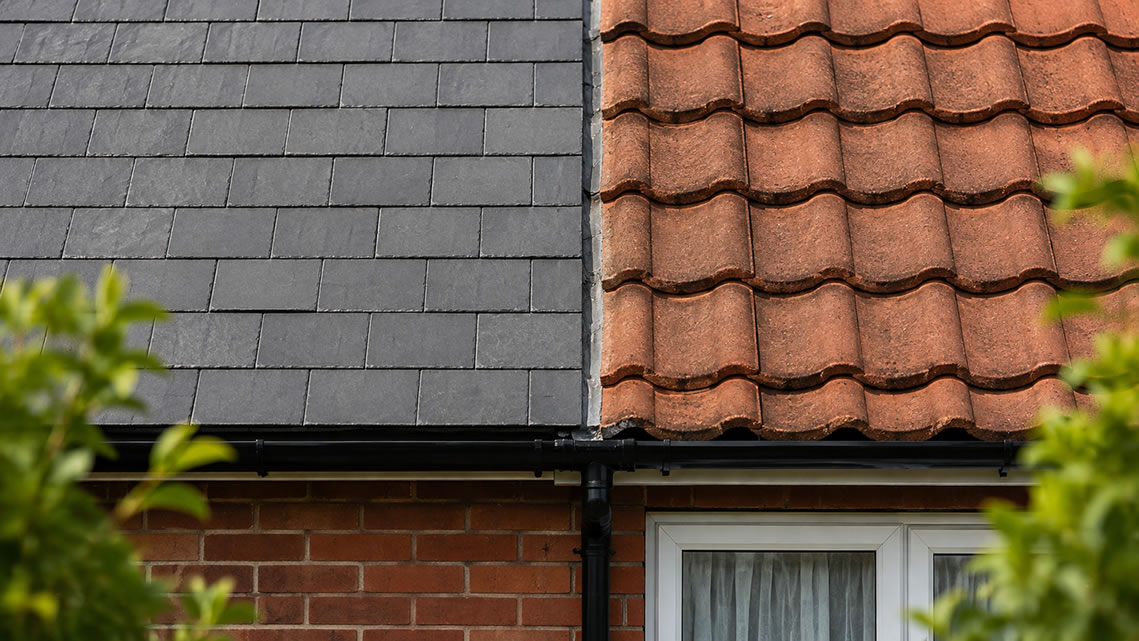
Choosing between a slate roof and a tiled roof is a decision that can affect a property for decades. Both materials suit UK weather well, and both can provide a long-lasting roof when installed correctly. However, there is a clear difference when you compare their potential lifespan.
In simple terms, natural slate usually lasts longer than clay or concrete roof tiles. A good-quality natural slate roof can remain serviceable for 100 years or more, and some well-maintained roofs last considerably longer. Clay tiles can also perform extremely well, often lasting 60 to 100 years. Meanwhile, modern concrete roof tiles commonly have an expected lifespan of around 60 years or more.
That does not automatically mean slate is the right choice for every home. Slate costs more, needs skilled installation and can make individual repairs more expensive. Concrete tiles, on the other hand, provide a practical and affordable roof covering and are easier to replace when a few tiles become damaged.
So, if you are replacing a roof, should you choose slate or tile?
This guide compares their lifespan, costs, appearance, maintenance, weight and repair requirements to help UK homeowners decide.
Which lasts longer: slate or roof tiles?
Natural slate generally wins on pure longevity.
As a broad guide:
| Roofing Material | Typical Potential Lifespan |
|---|---|
| Natural slate | 80 to 150+ years |
| Clay roof tiles | 60 to 100+ years |
| Concrete roof tiles | Around 50 to 75+ years |
| Fibre cement slate | Around 30 to 60 years |
| Synthetic slate | Often around 30 to 60 years |
These are not guaranteed lifespans. Exposure, material quality, roof pitch and installation all affect how long a roof actually lasts.
Nevertheless, natural slate remains one of the longest-lasting roof coverings commonly used on UK homes.
Why does natural slate last so long?
Natural slate starts as stone rather than a manufactured mixture. It has very low water absorption and can withstand decades of rain, frost and temperature changes.
Good-quality roofing slate also resists:
- rot
- insects
- UV exposure
- frost damage
- colour fading
- corrosion
- fire
This helps explain why older British towns and cities still contain Victorian and Edwardian homes with original or reused natural slate on their roofs.
However, the slate itself is only one part of the system. Fixings, battens, membrane and flashings may need attention long before good slate reaches the end of its useful life.
How long does a slate roof last?
A high-quality natural slate roof can often last 80 to 150 years or longer.
Some premium slate manufacturers describe correctly installed natural slate as having a service life of at least 100 years. In practice, there are also historic roofs where usable slate has survived well beyond this point.
However, lifespan depends on several factors.
Slate quality
Not every slate performs equally. Density, mineral composition and quarry quality can all affect durability.
Fixings
Older slate roofs often used nails that eventually corrode. This can lead to slipped slates even though the slate itself remains perfectly usable.
This problem is sometimes called nail sickness.
Installation quality
Incorrect headlap, poor fixing or badly designed flashing can create leaks long before the slate fails.
Roof exposure
A highly exposed coastal roof faces more wind-driven rain and salt than a sheltered suburban roof.
Maintenance
Replacing slipped slates and maintaining valleys, ridges and flashing can substantially extend the life of an older slate roof.
How long do clay roof tiles last?
Clay is another very durable roofing material.
A properly installed clay tile roof can commonly last 60 years or more, while good-quality clay roofs may remain serviceable for 80 to 100 years and sometimes longer.
Clay tiles perform particularly well because firing makes the material hard and resistant to weathering.
Older clay tiles are common on:
- Victorian houses
- Edwardian houses
- cottages
- period terraces
- traditional rural properties
In fact, roofers can sometimes salvage older clay tiles and reuse them during repairs because the tiles themselves remain sound.
How long do concrete roof tiles last?
Concrete tiles are one of the most common roof coverings on modern UK homes.
A good-quality concrete tile roof can generally be expected to last around 60 years or more, although actual life varies with the product, installation and exposure.
Concrete tiles may gradually change appearance as they age. Their surface colour can fade or weather, while moss and lichen may become more noticeable.
However, appearance does not necessarily mean the tile has failed.
Many concrete roof tiles remain structurally sound long after their original surface colour has changed.
Natural slate vs clay vs concrete lifespan
| Feature | Natural Slate | Clay Tile | Concrete Tile |
| Typical lifespan | 80–150+ years | 60–100+ years | 50–75+ years |
| Can exceed 100 years? | Commonly possible | Possible | Less common |
| Colour retention | Excellent | Very good | Can fade more noticeably |
| Frost resistance | Excellent with good slate | Very good | Very good |
| Rot resistance | Excellent | Excellent | Excellent |
| Maintenance | Low to moderate | Low | Low |
| Individual repair cost | Higher | Medium | Usually lower |
| Initial cost | Highest | Medium to high | Usually lowest |
If longevity is the only consideration, natural slate normally comes first, followed by clay and then concrete.
Does the whole slate roof really last 150 years?
Not necessarily.
This is an important distinction.
The slate itself may survive for well over 100 years, but other roof components may not.
An old slate roof may eventually need work because of:
- corroded nails
- failing battens
- deteriorating roof felt
- damaged lead valleys
- chimney flashing problems
- movement in ridge tiles
- timber defects
Therefore, a homeowner might need to strip and refurbish a slate roof even when many of the original slates remain reusable.
This is one reason roofers sometimes remove old natural slate carefully, replace the membrane and battens, then relay much of the same slate.
Which is cheaper: slate or tile?
Concrete tile is usually the cheapest mainstream option.
Clay sits somewhere in the middle, while natural slate normally costs more.
A simple comparison looks like this:
| Roofing Material | Relative Initial Cost |
| Concrete tile | £ |
| Clay tile | ££ |
| Natural slate | £££ |
However, initial cost does not tell the full story.
If natural slate lasts twice as long as a cheaper material, its long-term cost can become much more competitive.
The problem is that homeowners may not personally remain in the property for 80 or 100 years. Therefore, the immediate installation budget often matters more than theoretical lifetime cost.
Why does slate roofing cost more?
Several factors push the price higher.
The material itself costs more
Natural slate has to be quarried, graded, cut and transported.
Installation takes longer
Slates are generally smaller than large-format interlocking concrete tiles. Consequently, a roofer has many more individual pieces to fix.
Slate requires more skill
Setting out, cutting and detailing natural slate needs experience.
Repairs can be more specialist
A broken concrete tile can often be changed fairly quickly. Replacing slate without damaging surrounding pieces takes more care.
Which roof is cheaper to repair?
For ordinary domestic repairs, tile roofs are usually cheaper and easier to repair.
Concrete tiles in particular have several advantages:
- replacement tiles are widely available
- large formats cover more roof area
- roofers work with them regularly
- broken individual tiles can often be changed quickly
Slate repairs can become more expensive because the roofer may need:
- specialist tools
- slate hooks
- carefully matched replacement slate
- more time to remove surrounding pieces safely
However, an old slate roof may still be worth repairing precisely because the remaining roof covering could have decades of useful life left.
Can old slate be reused?
Yes, and this is one of natural slate’s major advantages.
When a roof needs stripping because the membrane or battens have failed, roofers can often salvage a significant percentage of the original slate.
They inspect each piece and separate:
- sound reusable slates
- damaged slates
- cracked pieces
- slates with weakened fixing holes
The usable slate can then go back onto the roof alongside carefully matched replacements.
This can preserve the character of an older property and reduce the amount of new material needed.
Can old roof tiles be reused?
Sometimes.
Clay tiles can remain reusable for many decades if they are still sound. Older handmade clay tiles are particularly valuable on period roofs where matching colour and texture matters.
Concrete tiles are less commonly reused on a large scale, although roofers may retain sound pieces for repairs.
Whether reuse makes sense depends on:
- age
- condition
- breakage rates during removal
- availability of matching replacements
- cost of labour needed to sort them
Which looks better: slate or tile?
This is largely personal preference, but property style matters.
Slate
Natural slate creates a thin, neat roof covering with a relatively uniform appearance.
It works particularly well on:
- Victorian terraces
- Georgian properties
- stone cottages
- period townhouses
- premium contemporary homes
Slate colours tend to remain relatively stable as the roof ages.
Clay tiles
Clay creates a warmer and more traditional appearance.
It suits:
- cottages
- period terraces
- rural properties
- Arts and Crafts homes
- traditional new builds
Natural variation in clay can give older roofs plenty of character.
Concrete tiles
Concrete comes in a much wider range of styles and profiles.
Options include:
- flat tiles
- plain tiles
- pantile-style profiles
- double Roman tiles
- slate-effect tiles
Therefore, concrete can suit almost any conventional UK property.
Which material is better for a period property?
Usually, the best option is to retain the material originally used on the property.
Replacing natural slate with large concrete tiles can completely alter the appearance of an older house. In addition, the roof structure may not have been designed for the additional weight.
Likewise, replacing traditional clay tiles with a very modern material can change the character of the building.
For conservation areas and listed buildings, homeowners may face restrictions on changing the roof covering.
Is slate heavier than roof tiles?
Interestingly, natural slate is often lighter per square metre than many concrete tile systems.
Concrete tiles can put a substantial load on the roof structure. Therefore, you should never assume that changing from slate to concrete is a simple material swap.
Before changing covering type, a roofer or structural professional may need to assess:
- rafters
- trusses
- battens
- roof pitch
- fixing specification
- overall roof load
This is particularly important on older properties.
Does roof pitch affect the choice?
Yes.
Every roofing product has a minimum pitch at which the manufacturer allows it to be installed.
Some modern interlocking concrete tiles can work on relatively low roof pitches. Traditional plain tiles and many slates usually require steeper pitches.
Therefore, the existing roof angle may immediately remove certain products from consideration.
A roofer should check the exact manufacturer’s specification rather than relying on a general rule for “slate” or “tiles”.
Which material handles UK weather best?
All three can perform well.
Natural slate
Particularly strong against:
- rain
- frost
- UV exposure
- coastal conditions
- temperature changes
Clay tiles
Very durable against:
- frost
- rainfall
- sunlight
- fire
- colour deterioration
Concrete tiles
Provide very good general performance against:
- rain
- frost
- wind
- normal UK temperature changes
Correct fixing and roof design often matter more than the difference between good-quality materials.
Which roof needs the least maintenance?
All three materials can remain relatively low maintenance.
Typical maintenance involves:
- replacing occasional slipped or broken units
- keeping valleys clear
- checking ridge details
- maintaining flashing
- removing excessive debris
- investigating leaks quickly
Slate itself tends to need little maintenance. However, repairs may cost more when they arise.
Concrete tiles are usually easier and cheaper to replace individually.
Clay sits somewhere between the two.
What actually determines how long a roof lasts?
The outer covering is only part of the story.
A long-lasting roof depends on:
Good installation
Even premium natural slate can fail early when installed badly.
Correct roof pitch
The covering must suit the slope.
Suitable fixings
Nails, clips and hooks need to suit the material and exposure.
Good ventilation
Poor roof-space ventilation can contribute to moisture problems around the structure.
Sound underlay and battens
The supporting roof system must remain in good condition.
Flashing and valley maintenance
Many roof leaks start at joints rather than through the tiles or slate themselves.
Early repairs
Replacing one slipped slate early may prevent moisture reaching battens and timbers.
Which roof offers the best long-term value?
There is no universal winner because budget matters.
Natural slate may offer the best lifetime value when:
- you intend to keep the property long term
- the house already has slate
- appearance matters
- you want maximum potential lifespan
- the roof structure suits slate
- you can afford the higher initial cost
Clay may offer the best compromise when:
- you want a traditional appearance
- longevity matters
- the property suits clay aesthetically
- you want something slightly less specialist than slate
Concrete may offer the best value when:
- initial budget matters most
- you want easy future repairs
- the property already has concrete tiles
- you want a broad choice of profiles and colours
- a 50 to 75+ year lifespan is more than adequate
Slate vs tile: overall comparison
| Factor | Natural Slate | Clay Tile | Concrete Tile |
| Lifespan | ★★★★★ | ★★★★☆ | ★★★☆☆ |
| Initial affordability | ★★☆☆☆ | ★★★☆☆ | ★★★★★ |
| Ease of repair | ★★★☆☆ | ★★★★☆ | ★★★★★ |
| Traditional appearance | ★★★★★ | ★★★★★ | ★★★☆☆ |
| Colour retention | ★★★★★ | ★★★★☆ | ★★★☆☆ |
| Range of styles | ★★★☆☆ | ★★★★☆ | ★★★★★ |
| Reuse potential | ★★★★★ | ★★★★☆ | ★★★☆☆ |
| Installer availability | ★★★★☆ | ★★★★☆ | ★★★★★ |
| Low maintenance | ★★★★★ | ★★★★★ | ★★★★☆ |
Should you replace slate with tiles?
Not automatically.
If the existing natural slate remains reusable, replacing it with concrete simply to reduce the immediate roofing cost may not provide the best long-term decision.
Before changing material, ask a roofer:
- how much existing slate can be reused?
- what is actually wrong with the current roof?
- are the slates failing or just the fixings?
- will concrete tiles increase the roof loading?
- will changing the material affect the property’s appearance?
- are planning or conservation restrictions relevant?
- what is the price difference between retaining slate and changing material?
Sometimes the cheapest solution is to reuse the existing slate on a renewed roof system.
Should you replace tiles with slate?
Slate can provide a substantial upgrade, but the economics need careful thought.
It may make sense when:
- the property style suits slate
- you want a premium finish
- you plan to keep the home long term
- the roof structure is suitable
- neighbouring properties use slate
- longevity matters more than the lowest upfront price
However, installing slate purely for its long lifespan may not make financial sense on every home.
What about artificial slate?
Artificial slate products can recreate some of the appearance of natural slate at a lower cost.
Common types include:
- fibre cement slate
- recycled plastic slate
- composite slate
- resin-based slate
They can offer advantages such as:
- consistent dimensions
- lighter weight
- faster installation
- lower purchase price
However, they generally do not match the potential 100-year-plus life of premium natural slate.
Therefore, homeowners should check the manufacturer’s expected service life and warranty carefully.
Choosing between slate and tiles for a new roof
Ask yourself five questions.
1. What is already on the house?
Keeping the same material can reduce complications and preserve the appearance of the property.
2. How long do I want the roof to last?
If maximum longevity matters, natural slate has the advantage.
3. What is my budget?
Concrete tiles normally provide the most affordable mainstream solution.
4. What suits the house?
Roofing should complement the property’s age, brickwork, stonework and surrounding homes.
5. How easy will future repairs be?
Concrete tiles tend to win for simplicity and availability, while natural slate may need a roofer experienced in traditional slate work.
Get slate and tile roof replacement quotes
Natural slate usually lasts the longest, but that does not automatically make it the best roof covering for every property.
Clay tiles can provide excellent longevity and traditional character, while concrete tiles give homeowners a durable, practical roof at a lower initial cost.
Before choosing, ask local roofers to inspect the existing structure and provide like-for-like prices for suitable materials.
Use the quotation form on this page to compare slate and tile roof replacement quotes from local roofing specialists.
Frequently asked questions
Which lasts longer, slate or roof tiles?
Natural slate generally lasts longer. A quality natural slate roof can often last 80 to 150 years or more, while clay tiles commonly last 60 to 100 years and concrete tiles around 50 to 75 years or longer.
Can a slate roof really last 100 years?
Yes. Good-quality natural slate can remain usable for more than 100 years when installed correctly. However, fixings, battens, membrane and flashings may need work sooner.
How long do concrete roof tiles last?
Modern concrete roof tiles commonly have an expected lifespan of around 60 years or more. Actual lifespan depends on product quality, installation and exposure.
How long do clay roof tiles last?
Clay tiles commonly last at least 60 years, while good-quality roofs can remain serviceable for 80 to 100 years or even longer.
Is slate more expensive than tile?
Usually, yes. Natural slate costs more to buy and takes more labour to install. Concrete tiles generally provide the cheapest mainstream option.
Is slate cheaper in the long run?
It can be. Because natural slate may last considerably longer, the lifetime cost can compare favourably with shorter-lived materials. However, the initial installation cost remains higher.
Are slate roofs difficult to repair?
They require more care than many concrete tile repairs. Nevertheless, experienced slate roofers can replace individual slipped or broken slates without replacing the whole roof.
Can old natural slate be reused?
Yes. Roofers can often salvage good-quality slate when stripping an old roof, then relay it over new membrane and battens.
Should I replace an old slate roof with concrete tiles?
Not without checking the existing slate and roof structure first. Reusable slate may still have decades of life, while heavier concrete tiles can alter the structural load.
What is the best roofing material overall?
Natural slate generally wins for lifespan. Clay offers an excellent combination of longevity and traditional appearance, while concrete tiles usually provide the best combination of affordability, availability and easy maintenance.