
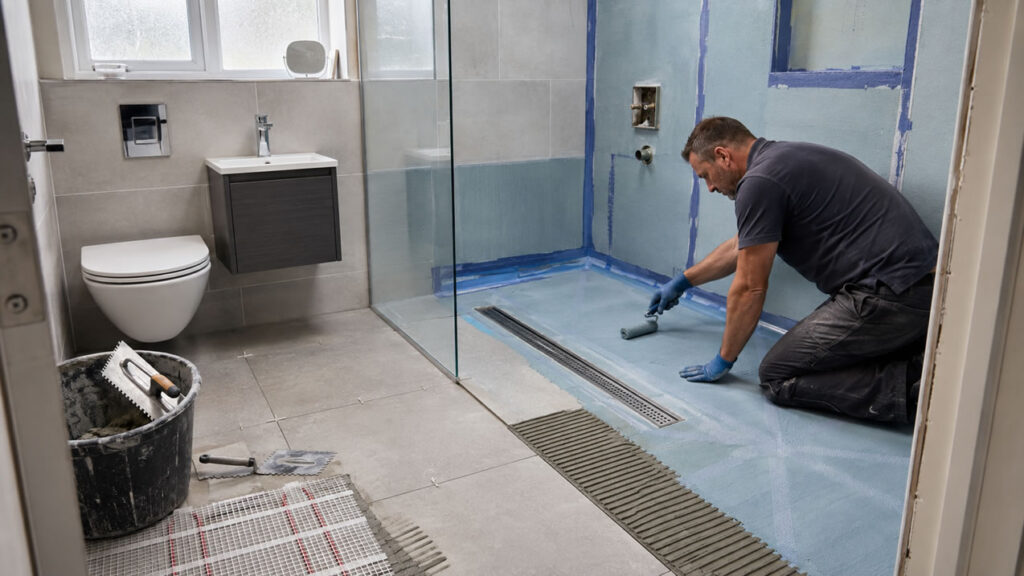
Instead of stepping into a conventional shower tray, the shower area forms part of the bathroom floor. Water runs towards a floor drain, while a waterproofing system underneath the tiles protects the structure of the house.
Wet rooms work particularly well for:
- small bathrooms
- ensuites
- downstairs shower rooms
- loft conversions
- modern bathroom refurbishments
- bathrooms where easier access is important
However, installing one involves more than simply removing the shower tray and tiling the floor.
The installer needs to get the waterproofing, floor falls, drainage and floor construction right. Mistakes in these hidden areas can lead to leaks that are expensive to repair.
As a broad 2026 UK guide, a complete wet room installation typically costs around £5,000 to £13,000, with many standard projects falling somewhere around £7,000 to £10,000.
Premium finishes, major plumbing changes and complicated upstairs installations can cost considerably more.
This guide explains wet room installation prices, waterproofing, drainage, flooring, accessibility and what homeowners should compare when requesting quotations.
How much does a wet room cost?
Typical UK guide prices include:
| Wet Room Project | Typical Cost |
|---|---|
| Small/basic wet room | £5,000–£7,000 |
| Standard wet room | £7,000–£10,000 |
| Larger or higher-spec wet room | £10,000–£13,000+ |
| Premium wet room | £12,000–£18,000+ |
| Wet room floor rebuild | £800–£1,500+ |
| Tanking/waterproofing | £500–£1,500+ |
| Underfloor heating | £400–£1,000+ |
| Glass shower screen | £250–£800+ |
The exact price depends heavily on what the installer discovers beneath the existing floor.
Wet room costs by size
Room size matters, although small wet rooms are not always proportionally cheaper.
| Wet Room Size | Typical Installed Cost |
| Very small ensuite | £5,000–£7,500 |
| 3–4m² wet room | £6,000–£9,000 |
| 4–6m² family wet room | £7,000–£11,000 |
| Larger wet room | £9,000–£13,000+ |
| High-spec larger room | £12,000–£18,000+ |
Even a very small room still needs:
- waterproofing
- drainage
- plumbing
- tiling
- electrical work
- ventilation
Therefore, cutting the floor area in half does not necessarily halve the installation price.
What is a wet room?
A wet room is a bathroom where the shower floor is effectively part of the room itself.
Instead of a raised shower tray, the floor gently slopes towards a drain.
The room usually includes:
- level or almost-level shower floor
- floor drain
- waterproof tanking
- wall and floor tiles
- shower controls
- glass screen
Some wet rooms are completely open.
However, most UK homeowners use a fixed glass panel to control spray and keep the toilet and basin area drier.
Wet room vs walk-in shower
They can look similar, but there is an important difference.
Wet room
The waterproofed floor forms the shower area.
Walk-in shower
Usually uses a conventional low-profile shower tray with an open glass screen.
A walk-in shower is generally simpler and cheaper to install.
A wet room provides a more seamless appearance and can offer better level access.
Why are wet rooms more expensive?
The work you cannot see is often the most expensive part.
A wet room requires careful installation of:
- drainage
- floor falls
- waterproofing
- floor preparation
- wall preparation
The installer also needs to coordinate:
- plumbing
- tiling
- electrics
- ventilation
As a result, labour makes up a substantial part of the overall cost.
What is included in wet room installation?
A full installation may include:
- removing the old bathroom
- waste disposal
- plumbing alterations
- floor preparation
- floor strengthening
- installing a shower former
- drain installation
- waterproof tanking
- wall preparation
- floor tiling
- wall tiling
- shower installation
- glass screen
- basin and toilet installation
- electrical work
- extractor fan
- lighting
- decoration
However, quotes vary considerably.
Always check exactly what each installer has included.
Removing the old bathroom
Most projects begin with stripping out:
- bath
- shower
- shower tray
- toilet
- basin
- wall tiles
- floor covering
A straightforward strip-out might cost around £300 to £800, including basic disposal.
Complex bathrooms can cost more.
Wet room floor construction
The floor needs to slope gently towards the drain.
There are several ways to achieve this.
One common approach uses a prefabricated wet room floor former.
The former already incorporates the required fall towards the drain.
Another method involves constructing the fall manually using suitable floor materials.
The installer chooses the method according to:
- floor type
- room size
- joist layout
- drainage position
Wet room floor former costs
A quality floor former may cost several hundred pounds before installation.
The installer may also need:
- strengthening boards
- waterproof membranes
- drain components
- adhesives
Although cheaper systems exist, the floor former is not an area where most homeowners should try to save a small amount of money.
Wet rooms on timber floors
Many upstairs UK bathrooms have timber floors.
A wet room can still be installed successfully.
However, the installer needs to consider:
- joist positions
- floor movement
- floor strength
- drain location
- waterproofing
Timber floors flex more than concrete.
Therefore, careful preparation is particularly important.
Does the floor need strengthening?
Sometimes.
The installer may need to:
- add noggins
- reinforce joists
- install structural boards
- replace damaged floorboards
This work can add several hundred pounds or more.
Older homes may need more preparation than modern properties.
Wet rooms on concrete floors
Ground-floor wet rooms often have concrete floors.
These can provide a solid base.
However, installing the drainage may involve:
- cutting concrete
- creating channels
- altering waste pipes
Therefore, a concrete floor does not automatically make installation cheaper.
Waterproofing a wet room
Waterproofing is one of the most important parts of the project.
Tiles and grout alone are not waterproof enough to protect the room structure.
A proper tanking system creates a waterproof layer beneath the finished tiles.
What is wet room tanking?
Tanking normally involves waterproofing:
- the floor
- shower walls
- corners
- pipe penetrations
- joints
- drain connection
Products may include:
- liquid waterproof membrane
- waterproof sheet membrane
- waterproof construction boards
- sealing tapes
- waterproof collars
The different parts should form one continuous system.
How much does wet room tanking cost?
Waterproofing materials and labour can cost around £500 to £1,500 or more depending on room size and system.
Premium board-based systems can cost more.
However, tanking is one of the most important parts of the entire installation.
A leak beneath the tiles can damage:
- ceilings
- joists
- plaster
- electrics
- adjoining rooms
Should the whole room be waterproofed?
At minimum, the shower area needs comprehensive waterproofing.
Many installers tank the complete floor and extend waterproofing further around the room.
The exact specification depends on the design and system.
Ask the installer to explain exactly which areas will be waterproofed.
Wet room drainage
The drain needs to remove water quickly enough to prevent flooding.
Common options include:
- central square drains
- linear drains
- wall-edge drains
Linear drains have become particularly popular in modern bathrooms.
Linear wet room drains
A linear drain creates a long narrow drainage channel.
Advantages include:
- modern appearance
- easier large-format tile layouts
- simple one-direction floor fall
They usually cost more than a basic square drain.
Where should the drain go?
The ideal position depends on:
- existing waste pipe
- floor joists
- shower layout
- room shape
Moving the drain to the opposite side of the bathroom can add substantial labour.
Therefore, keeping the shower near existing plumbing may reduce costs.
Creating the floor fall
Water needs to flow naturally towards the drain.
If the slope is too shallow, water can sit on the floor.
If it is too steep, the floor may feel uncomfortable.
This is one reason professional wet room installation requires accurate preparation.
Wet room tiling costs
Tiling forms a significant part of the final bill.
Typical fitted tiling can cost approximately £50 to £120 per m² or more, depending on:
- tile size
- pattern
- room shape
- cutting
- preparation
Premium materials cost more.
Porcelain wet room tiles
Porcelain works particularly well in wet rooms.
Advantages include:
- low water absorption
- durability
- wide design choice
- easy maintenance
Choose tiles specifically rated for bathroom floors.
Non-slip wet room tiles
Floor tiles need suitable slip resistance.
This is particularly important because the shower floor regularly becomes wet.
Textured porcelain and anti-slip bathroom tiles are common choices.
A bathroom installer or tile supplier can advise on appropriate products.
Large-format wet room tiles
Large tiles can create a clean and contemporary appearance.
However, creating the correct fall around a small central drain can be difficult with very large tiles.
A linear drain can make large-format paving easier because the floor can slope in one direction.
Mosaic shower floors
Mosaics are another common option.
Their small size makes it easier to follow the gradient towards a central drain.
They also create many grout lines, which can improve grip.
However, more grout means more cleaning.
Wet room wall tiles
You do not necessarily have to tile every wall from floor to ceiling.
Options include:
- fully tiled room
- tiled shower area
- half-height tiling elsewhere
Full-height tiling creates a premium finish but costs more.
Shower screens
Many wet rooms include one fixed glass panel.
Typical prices range from approximately £250 to £800 or more.
A screen helps prevent water reaching:
- toilet
- basin
- towels
- doorway
Frameless glass provides a clean modern appearance.
Shower system costs
You can choose between:
- exposed thermostatic shower
- concealed shower valve
- rainfall shower
- handheld shower
- combined system
Typical shower equipment can range from £250 to £1,500+.
Concealed valves generally cost more to install because pipework sits behind the finished wall.
Wet room underfloor heating
Electric underfloor heating is particularly popular in wet rooms.
It provides:
- warm tiles
- quicker floor drying
- additional comfort
A small bathroom system may cost around £400 to £1,000+ installed.
Larger systems cost more.
Is underfloor heating worth it?
It can be.
Wet room floors often feel cold because they usually use:
- porcelain
- ceramic
- stone
Heating makes the room more comfortable and can help surface water evaporate more quickly.
However, it increases installation cost and electricity use.
Wet room ventilation
Good ventilation is essential.
A wet room produces a lot of moisture.
Without adequate extraction, condensation can affect:
- ceilings
- paintwork
- windows
- furniture
- adjoining rooms
A suitable extractor fan might cost around £150 to £400+ supplied and installed.
Wet room electrical work
Bathroom electrical installations need to follow specific safety requirements.
Common electrical work includes:
- lighting
- extractor fans
- underfloor heating
- illuminated mirrors
- electric showers
Electrical work should be carried out by a suitably qualified person.
Wet room lighting
Popular options include:
- recessed spotlights
- mirror lighting
- LED niches
- low-level lighting
Lighting should complement rather than clutter a small wet room.
Small wet rooms
A wet room can work especially well in a small bathroom.
Removing a bulky enclosure can make the room feel considerably larger.
Good layouts may include:
- wall-hung basin
- compact toilet
- fixed glass shower panel
- recessed storage niche
However, a small room needs careful splash control.
Without a screen, most surfaces may get wet during every shower.
Wet room ensuites
Wet rooms are popular for ensuite bathrooms because the open shower layout can save space.
A compact ensuite wet room could cost approximately £5,000 to £8,000, depending on the specification.
Keeping plumbing near the existing soil and waste pipes can help control costs.
Downstairs wet rooms
A downstairs wet room can work well where homeowners want:
- additional shower space
- guest facilities
- easier access
- future-proofing
Existing utility rooms and downstairs bathrooms can sometimes be converted.
Drainage is often the main consideration.
Accessible wet rooms
A wet room can provide easier access than a conventional shower tray.
Possible features include:
- level-access shower
- fold-down seat
- grab rails
- handheld shower
- thermostatic controls
- wider entrance
- non-slip flooring
The design should suit the individual user rather than relying on a standard layout.
Wet room or bath?
Removing the bath can free up considerable floor space.
However, some households still value having a bath.
One option is to keep the bath in the main family bathroom and install a wet room in:
- ensuite
- downstairs bathroom
- loft conversion
This gives the property both options.
Can a bath be included in a wet room?
Yes.
Larger bathrooms can contain both:
- bath
- open wet room shower
The waterproofing and drainage design still needs careful planning.
Wet rooms in loft conversions
Wet rooms can work well in lofts, especially where sloping ceilings make conventional shower enclosures awkward.
However, upstairs drainage can be more complicated.
The installer needs to consider:
- joists
- waste pipe routes
- floor depth
- ceiling below
This can increase installation cost.
Converting a normal bathroom into a wet room
Many installations involve converting an existing bathroom.
A typical project may include:
- removing the bath or shower
- stripping floor and wall finishes
- altering plumbing
- preparing the floor
- installing drainage
- fitting the floor former
- tanking the room
- tiling
- installing sanitaryware
- fitting shower screen and controls
Because much of the room has to be rebuilt, costs can approach those of a complete bathroom renovation.
How long does wet room installation take?
A straightforward wet room may take around 5 to 10 working days.
| Project | Typical Time |
| Small straightforward wet room | 4–7 days |
| Standard bathroom conversion | 7–10 days |
| Complex wet room | 10–15 days |
| Structural alterations required | 2–3 weeks+ |
Drying and curing times also matter.
Rushing waterproofing or adhesives can create future problems.
Can you use the bathroom during installation?
Usually not.
The toilet may sometimes remain usable during part of the project, but this depends on the sequence of work.
If it is your only bathroom, discuss this with the installer beforehand.
Wet room floor replacement
Existing wet rooms can sometimes develop problems such as:
- cracked tiles
- failed waterproofing
- poor drainage
- loose flooring
Repairing the floor may require removing:
- tiles
- adhesives
- waterproofing
- floor former
A wet room floor rebuild might cost around £800 to £1,500 or more, but extensive leak damage can push costs much higher.
Signs a wet room has failed
Look out for:
- loose tiles
- cracked grout
- persistent damp smell
- staining on ceilings below
- water pooling
- soft flooring
- damaged skirting outside the room
Do not ignore suspected leakage.
The source may be hidden underneath the finished surface.
Wet room maintenance
A correctly installed wet room should not need complicated maintenance.
Regular tasks include:
- cleaning tiles
- cleaning the drain
- checking silicone joints
- removing limescale from shower screens
- keeping ventilation clear
Promptly investigate any cracked tiles or failed sealant.
How long does a wet room last?
A quality wet room can last 20 years or more.
The waterproofing system can last much longer if properly installed and left undisturbed.
Visible components such as:
- taps
- shower valves
- silicone
- grout
may need maintenance sooner.
Wet room vs standard bathroom costs
| Feature | Standard Bathroom | Wet Room |
| Typical cost | £4,000–£10,000+ | £5,000–£13,000+ |
| Shower tray | Usually | No |
| Full tanking | Usually limited | Essential |
| Floor drainage | Conventional | Integrated |
| Level access | Optional | Excellent |
| Installation complexity | Medium | Higher |
| Contemporary look | Good | Excellent |
Wet rooms normally cost more because of the extra waterproofing and floor preparation.
Wet room vs walk-in shower costs
A walk-in shower is usually cheaper.
It retains a shower tray, so the installer does not normally need to create a fully drained shower floor.
Choose a wet room if:
- level access matters
- space is limited
- you want a seamless finish
Choose a walk-in shower if:
- budget matters
- you want easier installation
- the existing floor makes wet room conversion difficult
What affects wet room installation quotes?
Room size
Larger rooms need more waterproofing and tiles.
Existing bathroom
A complete strip-out costs more than working in an empty room.
Floor construction
Timber floors may require reinforcement.
Drain location
Moving drainage can add considerable labour.
Waterproofing system
Premium systems cost more.
Tiles
Large-format porcelain and natural stone increase costs.
Shower specification
Designer brassware can add thousands of pounds.
Sanitaryware
Wall-hung toilets and concealed cisterns cost more.
Underfloor heating
This adds materials and electrical work.
Access
Difficult upstairs access can increase labour.
Location
Labour rates tend to be higher in London and parts of the South East.
What should a wet room quote include?
Compare each quotation carefully.
| Quote Item | What to Check |
| Strip-out | Included? |
| Waste removal | Included? |
| Floor preparation | Included? |
| Structural strengthening | Included or provisional? |
| Floor former | Brand/specification |
| Drain | Included? |
| Tanking | Which system? |
| Plumbing | Included? |
| Shower | Exact model |
| Screen | Included? |
| Tiles | Material allowance |
| Tiling labour | Included? |
| Underfloor heating | Included? |
| Electrical work | Included? |
| Extractor fan | Included? |
| Decorating | Included? |
| VAT | Included or extra? |
| Guarantee | What is covered? |
Waterproofing guarantee
Ask what guarantee applies to the tanking system.
Some manufacturers offer system guarantees when installers use compatible:
- boards
- membranes
- adhesives
- tapes
- drains
The workmanship guarantee from the installer may be separate.
Keep:
- invoices
- product details
- photographs
- guarantees
after completion.
Cheap wet room quotes
Very cheap wet room quotes deserve careful checking.
Savings may come from reducing:
- floor preparation
- tanking
- drainage work
- quality of materials
Unfortunately, these are precisely the areas that determine whether the wet room remains watertight.
A leak discovered two years later can require the finished bathroom to be dismantled.
Common wet room installation mistakes
Poor waterproofing
This can allow hidden leaks.
Incorrect floor falls
Water sits away from the drain.
Inadequate drainage
The shower produces water faster than the drain removes it.
Flexible floor
Movement can crack tiles and grout.
Wrong tiles
Highly polished flooring can become slippery.
Poor ventilation
Condensation builds up.
Bad shower screen position
Water reaches the toilet, door or towels.
Cutting costs on preparation
Problems hidden beneath the tiles can become expensive later.
Should you install a wet room yourself?
For most homeowners, a complete wet room is not an ideal DIY project.
The consequences of incorrect:
- tanking
- drainage
- floor falls
can be significant.
Experienced DIYers may be able to complete decorative parts of a bathroom renovation.
However, the waterproofing and drainage need particular care.
Questions to ask a wet room installer
Before accepting a quote, ask:
- How will you create the floor fall?
- What wet room former will you use?
- How will you waterproof the room?
- Which areas will be tanked?
- Does the floor need strengthening?
- Where will the drain go?
- Will the existing waste pipe be suitable?
- What tiles are included?
- Is the shower screen included?
- Is underfloor heating included?
- Is electrical work included?
- Is waste removal included?
- How long will the installation take?
- What waterproofing guarantee is provided?
- What workmanship guarantee do you offer?
A good installer should be happy to explain the hidden construction as well as the visible finishes.
Get wet room installation quotes
Wet rooms can create a modern, spacious and practical bathroom, particularly in small rooms where a conventional shower enclosure takes up too much space.
As a broad guide, a full wet room installation in the UK may cost around £5,000 to £13,000, although premium and complicated projects can cost considerably more.
The quality of the waterproofing, drainage and floor construction matters just as much as the tiles and shower you can see.
Therefore, compare the full installation specification rather than simply choosing the lowest price.
Use the quotation form on this page to compare wet room installation quotes from local bathroom and wet room specialists.
Frequently Asked Questions
How much does a wet room cost in the UK?
A complete wet room installation typically costs around £5,000 to £13,000, with many standard projects falling between approximately £7,000 and £10,000.
How much does a small wet room cost?
A small or straightforward wet room may cost around £5,000 to £7,500, although difficult drainage or structural work can increase the price.
Is a wet room more expensive than a normal bathroom?
Usually, yes. Wet rooms require additional waterproofing, floor preparation and specialist drainage.
Is a wet room more expensive than a walk-in shower?
Usually. A walk-in shower normally retains a conventional shower tray, while a wet room requires the floor itself to form part of the drainage system.
Can you install a wet room upstairs?
Yes. Wet rooms can be installed on timber upper floors, although the installer may need to strengthen the floor and work carefully around joists and drainage.
Does the entire wet room need waterproofing?
The shower area needs comprehensive waterproofing, while many installers also waterproof the complete floor and other vulnerable areas.
How long does wet room installation take?
A typical installation may take around five to ten working days. More complicated projects can take two weeks or longer.
Can a wet room have underfloor heating?
Yes. Electric underfloor heating is particularly popular beneath tiled wet room floors.
What tiles are best for a wet room?
Porcelain tiles with suitable slip resistance are a popular option because they absorb very little water and are easy to maintain.
Can you convert a normal bathroom into a wet room?
Yes. Most existing bathrooms can potentially be converted, although floor construction and drainage need to be assessed first.
How long should a wet room last?
A professionally installed wet room can last 20 years or more, although sealants, grout and fittings may need maintenance during that time.
Should I compare several wet room installation quotes?
Yes. Compare the floor construction, drainage, waterproofing system, tiling, sanitaryware, electrical work and guarantees as well as the total price.