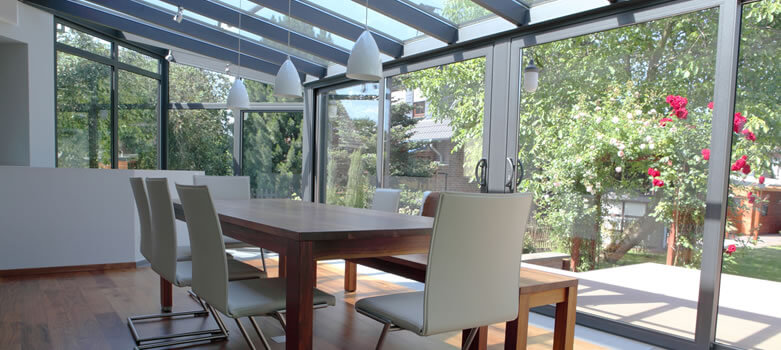
Aluminium is a metal that is being used for conservatory frames increasingly more often. It used to be unpopular, as old designs had poor energy efficiency rates. But most aluminium conservatories have good insulating characteristics now, and their popularity is on the up.
But is an aluminium conservatory best for you? We’ve come up with a set of advantages and downsides to help you choose.
Pros
Long-lasting
Aluminium is long-lasting. If an aluminium conservatory is installed properly it can last longer than an uPVC or wooden conservatory easily.
Resilient
Aluminium is durable. It won’t get harmed by water, sunlight or extreme temperatures. This contrasts with timber, which can rot or warp.
Easy to look after
Aluminium is simple to maintain. You don’t need to treat it with anything, and can clean it with a wet towel easily.
Flexible
Aluminium is flexible. Framework manufacturers can bend it to make odd-shaped or round windows.
lightweight
and
Strong
Aluminium is light-weight and strong. This means that your conservatory can be whatever height you like. This means that its structures can be quite thin also. This will maximise your view outdoors.

Another advantage is security. The effectiveness of aluminium means that aluminium conservatories are extremely difficult to break right into.
Recyclable
Aluminium is 100% recyclable. You are able to either reuse conservatory framing, or send it away to be melted down to make something new.
Disadvantages
Expensive
Aluminium is expensive. An aluminium conservatory will cost you much more than an uPVC or wooden one.
Can be inefficient
Low quality aluminium frames can be inefficient. Aluminium conducts heat, so poorly-made frames will allow heat out of your home.
So aluminium conservatories have several pros and disadvantages. If you believe an aluminium conservatory is right for you, complete our online form. We’ll put you in contact with up to 4 tradespeople in your area.