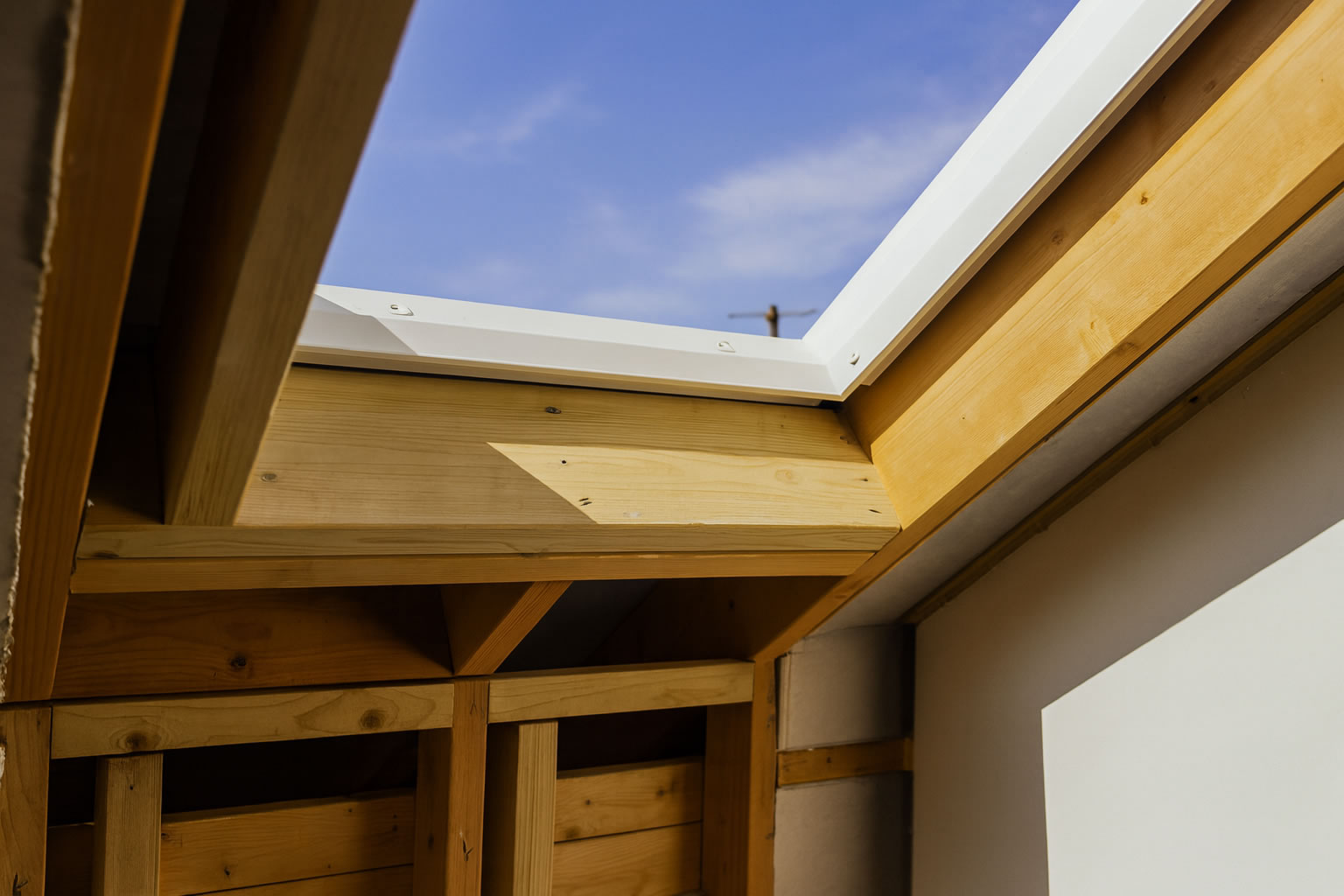
Roof skylights bring natural light into loft rooms, extensions, stairwells and converted roof spaces. However, because they sit directly within the roof covering, they can develop leaks, draughts and condensation problems as they get older.
A damp mark around a skylight does not always mean that the window itself has failed. Water may enter through damaged flashing, slipped roof tiles, cracked seals or poorly fitted roofing underlay. In other cases, condensation forms on the glass and runs down the frame, creating symptoms that look similar to a roof leak.
Some skylight faults only need a new seal, flashing repair or replacement pane. More serious problems may require the complete roof window to be removed and replaced.
This guide explains the most common roof skylight problems, how repairs are carried out, likely UK costs and when skylight replacement may offer better value.
What Is a Roof Skylight?
A roof skylight is a glazed opening fitted into a pitched or flat roof.
The terms skylight, rooflight and roof window are often used interchangeably. However, there can be small differences:
| Term | Common Meaning |
|---|---|
| Roof window | An opening glazed unit fitted within the roof slope |
| Skylight | A general term for glazing that brings light through a roof |
| Rooflight | Often used for fixed or flat-roof glazing |
| Lantern rooflight | Raised glazed structure fitted to a flat roof |
| Sun tunnel | Reflective tube carrying daylight into the property |
Popular installations include centre-pivot roof windows, top-hung windows, fixed skylights and flat-roof domes.
Why Do Roof Skylights Leak?
Skylights interrupt the normal roof covering, so every edge and junction must direct rainwater safely around the opening.
Common causes of leaks include:
- Damaged flashing
- Failed seals
- Cracked glass
- Slipped roof tiles
- Blocked drainage channels
- Poor original installation
- Torn roofing underlay
- Failed flat-roof membrane
- Loose frame fixings
- Rotten timber kerbs
- Condensation
- Cracked exterior trims
- Water pooling above the skylight
- Incorrect roof pitch
- Wind-driven rain
- Ice or snow build-up
- Moss and leaves around the frame
Leaks often become visible during heavy rain because more water passes around the window and exposes weak joints.
Common Roof Skylight Faults
| Skylight Fault | Likely Cause | Possible Result |
| Water around the frame | Failed flashing or seals | Damp plaster and timber |
| Condensation on the glass | High humidity or poor ventilation | Mould and staining |
| Misted double glazing | Failed sealed glazing unit | Reduced insulation and cloudy glass |
| Cracked glass | Impact or thermal stress | Water entry and safety risk |
| Draught around the frame | Worn seals or poor fitting | Heat loss and discomfort |
| Stiff opening mechanism | Dirt, corrosion or worn hinges | Window difficult to use |
| Broken handle | Wear or damaged mechanism | Window cannot close securely |
| Rotten timber frame | Long-term moisture exposure | Weak frame and recurring leaks |
| Loose exterior flashing | Storm damage or poor installation | Rain enters beneath the roof covering |
| Damaged roof tiles | Impact or previous roof work | Water reaches the underlay |
| Blocked drainage channel | Moss, leaves or debris | Water backs up around the frame |
| Cracked flat-roof kerb | Movement or rot | Leaks around rooflight base |
| Torn underlay | Age or poor detailing | Water enters the roof structure |
| Failed blind or motor | Wear or electrical fault | Reduced usability |
Signs That a Skylight Needs Repair
A skylight fault may produce visible signs around the window or elsewhere in the room.
Look out for:
- Water dripping from the frame
- Brown stains on plaster
- Bubbling paint
- Peeling wallpaper
- Damp insulation
- Mould around the reveal
- Condensation between glass panes
- A cold draught
- Cracked or broken glass
- Loose exterior trims
- Difficulty opening or closing the window
- A handle that no longer locks
- Timber that feels soft
- Water stains on rafters
- Damp appearing after wind-driven rain
- Moss or leaves collecting above the skylight
- Roof tiles slipping around the frame
A small stain may remain visible after a successful repair, so check whether it becomes darker or wetter during rainfall.
Is the Skylight Leaking or Is It Condensation?
Condensation is one of the most common reasons homeowners believe a skylight is leaking.
Warm, moisture-laden air rises towards the roof. When it reaches cold glass or an uninsulated frame, water vapour can condense into droplets.
Signs of condensation
- Water appears mainly during cold weather
- Droplets form across the inside of the glass
- Mould develops around the internal reveal
- The room has poor ventilation
- Damp does not follow rainfall closely
- Several windows in the property also mist up
- The problem worsens after showering, cooking or drying clothes
Signs of an external leak
- Water appears during or after rain
- Staining starts at one corner
- Plaster becomes wet above the frame
- Water tracks down one side
- Nearby roof tiles or flashing are damaged
- The loft insulation around the opening is wet
- The leak worsens during wind-driven rain
Both problems can occur at the same time. A failed external seal may let rain in, while poor insulation around the window causes condensation internally.
Common Condensation Causes
| Cause | Possible Solution |
| High indoor humidity | Improve extraction and ventilation |
| Bathroom fan not working | Repair or replace the extractor |
| Kitchen moisture | Use a suitable cooker hood |
| Clothes drying indoors | Increase ventilation or use a dehumidifier |
| Cold window reveal | Improve insulation around the opening |
| Furniture blocking airflow | Allow warm air to circulate |
| Poor room heating | Maintain a steadier temperature |
| Failed double glazing | Replace the sealed glass unit |
| Missing vapour control | Review the roof build-up |
| Insulation gaps | Reinsulate around the frame |
Wiping away condensation treats the symptom but not the underlying moisture problem.
Damaged Skylight Flashing
Flashing is the weatherproof system fitted around the outside of a skylight.
It forms channels that direct rainwater around the frame and back onto the roof covering.
Flashing may fail because of:
- Storm damage
- Poor installation
- Incorrect flashing kit
- Cracked sealant
- Loose components
- Corrosion
- Damaged roof tiles
- Incorrect tile cutting
- Moss and debris
- Roof movement
- Previous repairs
- A window fitted too high or low in the roof
A flashing repair may involve refitting loose sections, replacing damaged components or installing a new flashing kit.
Different Skylight Flashing Types
Flashing must suit both the roof window and the roof covering.
| Roof Covering | Typical Flashing Requirement |
| Interlocking concrete tiles | Profiled tile flashing kit |
| Plain tiles | Flashing suited to thinner tile coverings |
| Natural slate | Low-profile slate flashing |
| Artificial slate | Compatible low-profile flashing |
| Metal sheet roof | Specialist sheet-roof detail |
| Standing seam roof | Purpose-made metal flashing |
| Flat felt roof | Waterproof kerb and membrane upstand |
| EPDM roof | Bonded membrane detail around kerb |
| GRP roof | Laminated fibreglass upstand |
| Green roof | Raised kerb with specialist waterproofing |
Using the wrong flashing kit can leave gaps or restrict water flow.
Worn or Failed Skylight Seals
Opening roof windows normally have rubber or foam seals around the sash.
Over time, these seals may:
- Flatten
- Split
- Shrink
- Harden
- Pull away
- Become covered in dirt
- Lose contact with the frame
Worn seals can create draughts and may allow wind-driven rain into the window.
Replacement seals must match the window model and profile. A general strip of self-adhesive foam may not provide the correct compression or drainage.
Misted Roof Window Glass
Double- or triple-glazed roof windows contain sealed glazing units. When the perimeter seal fails, moisture enters between the panes.
This causes:
- Cloudy glass
- Permanent misting
- Water droplets between panes
- Reduced thermal performance
- A dirty appearance that cannot be cleaned away
The outer window frame may still be sound, so the glazing unit can sometimes be replaced without changing the whole skylight.
Can Skylight Glass Be Replaced?
Yes. Roof window glass can often be replaced where:
- The frame remains sound
- Hinges and mechanisms still work
- A matching glazing unit is available
- Flashing remains suitable
- The window has not distorted
- Timber has not rotted badly
Glass replacement may be appropriate for:
- Cracked panes
- Failed double glazing
- Impact damage
- Poor thermal performance
- Failed internal coatings
The installer should confirm the correct glass size, thickness, safety rating and window model.
Cracked or Broken Skylight Glass
Cracked glass should receive prompt attention.
Possible causes include:
- Falling branches
- Roof work
- Hail
- Thermal stress
- Accidental impact
- Frame movement
- Installation pressure
- Old glazing
Do not apply heavy pressure or attempt to remove a large cracked pane without suitable experience. Roof glazing can be heavy and awkward to handle.
Temporary weatherproofing may be needed until a replacement unit arrives.
Timber Skylight Frame Repairs
Older roof windows often have timber frames.
Water and condensation can cause:
- Flaking paint
- Surface mould
- Soft timber
- Open joints
- Swelling
- Cracking
- Rot around corners
- Damage near the sill
- Difficulty closing the window
Minor timber repairs
Light surface damage may be repaired by:
- Removing loose paint.
- Cleaning mould.
- Allowing the timber to dry.
- Treating affected areas.
- Filling small defects.
- Sanding the surface.
- Applying suitable primer and finish.
Major timber damage
Replacement may be better where:
- The frame is deeply rotten
- Hinges no longer hold
- The sash has distorted
- Several joints have opened
- Water has reached the structural opening
- The window no longer closes securely
A painted surface can sometimes hide serious decay underneath.
uPVC and Aluminium Skylight Faults
Modern skylights may have uPVC, polyurethane-coated timber or aluminium components.
Common faults include:
- Cracked corner joints
- Damaged exterior cladding
- Loose trims
- Warped sash components
- Failed seals
- Corroded fixings
- Broken hinges
- Worn locking mechanisms
These materials do not rot like exposed timber, but the surrounding roof structure can still suffer water damage.
Broken Skylight Handles and Hinges
Opening roof windows contain moving parts that wear with use.
Possible faults include:
- Broken handle
- Failed lock
- Loose hinge
- Stiff pivot
- Worn gas strut
- Broken chain motor
- Sash not staying open
- Window refusing to close fully
- Misaligned frame
- Safety catch failure
Some components can be replaced individually. The correct part usually depends on the manufacturer, model and production code.
Electric and Solar-Powered Skylight Repairs
Motorised skylights may stop working because of:
- Failed batteries
- Power supply problems
- Motor failure
- Faulty wall switch
- Remote control issues
- Damaged rain sensor
- Broken chain mechanism
- Wiring faults
- Control unit failure
- Window obstruction
Before assuming the motor has failed, check:
- Batteries
- Power supply
- Reset procedure
- Remote pairing
- Obstructions
- Rain sensor condition
Electrical repairs should be completed by a suitably competent person.
Blocked Skylight Drainage Channels
Many roof windows have drainage channels around the frame.
Leaves, moss, dirt and pieces of mortar can block these routes. Water then backs up and may enter beneath the flashing or seals.
A maintenance visit may involve:
- Removing surrounding tiles
- Clearing drainage channels
- Removing moss
- Checking flashing laps
- Cleaning the frame
- Testing water flow
- Replacing damaged components
The surrounding gutters and roof valleys should also remain clear.
Slipped or Broken Tiles Around a Skylight
Roof tiles often need cutting to fit around a skylight.
These smaller pieces may have fewer fixing points and can move during strong winds.
Common issues include:
- Broken cut tiles
- Loose slate clips
- Missing tiles
- Poor headlap
- Tiles pressing against flashing
- Gaps around the frame
- Mortar used instead of proper flashing
- Cracked tiles caused by foot traffic
Replacing the skylight seal will not solve a leak caused by damaged surrounding tiles.
Damaged Roofing Underlay Around a Skylight
Roofing underlay should direct any moisture around the window opening.
Problems can arise where it has been:
- Cut too short
- Torn
- Folded incorrectly
- Left unsupported
- Sealed with unsuitable tape
- Damaged during window fitting
- Poorly connected to an underfelt collar
- Left open above the frame
A proper repair often requires tiles and battens to be lifted around the skylight.
Flat Roof Skylight Repairs
Flat-roof skylights usually sit on a raised kerb.
Leaks may develop around:
- Felt upstands
- EPDM seams
- GRP laminate
- Kerb corners
- Roof outlets
- Fixing points
- Glazing seals
- Cracked domes
- Failed roof lantern joints
- Rotten timber kerbs
Standing water around the rooflight increases the chance of leaks.
The waterproof covering should rise sufficiently up the kerb and form secure corners.
Flat Roof Skylight Faults
| Fault | Typical Repair |
| Small felt split | Compatible local patch |
| Failed EPDM seam | Clean, prime and apply approved repair |
| Cracked GRP corner | Prepare and laminate affected area |
| Rotten timber kerb | Strip covering and replace timber |
| Cracked polycarbonate dome | Replace dome |
| Failed glazing seal | Replace gasket or sealed unit |
| Standing water | Improve roof falls or drainage |
| Loose rooflight frame | Refix and renew waterproof detail |
| Failed lantern joint | Specialist resealing or component replacement |
Roof Lantern Repairs
Roof lanterns contain more frames, joints and glazing panels than a basic skylight.
Common problems include:
- Failed glazing seals
- Leaking ridge joints
- Condensation
- Blocked drainage channels
- Loose caps
- Cracked glass
- Frame movement
- Perished gaskets
- Poor connection to the flat roof
A leak near a lantern does not always come through the glazing. It may enter through the kerb or flat-roof membrane and travel before appearing indoors.
Can a Skylight Leak Be Repaired Without Removing It?
Yes, depending on the fault.
Repairs may be possible without removing the full unit where:
- A seal needs replacing
- One flashing component has moved
- Nearby roof tiles are damaged
- Drainage channels are blocked
- The glass unit needs replacing
- A handle or hinge has failed
- A small flat-roof membrane defect is present
Complete removal may be required where:
- The frame is rotten
- The skylight was installed incorrectly
- The opening needs rebuilding
- Underlay detailing has failed widely
- The window has distorted
- The wrong flashing kit was used
- The unit has reached the end of its useful life
Repair or Replace the Skylight?
| Condition | Likely Option |
| Blocked drainage channel | Clean and inspect |
| One worn seal | Replace seal |
| One damaged flashing piece | Local flashing repair |
| Cracked glazing unit | Replace glass |
| Broken handle | Replace mechanism |
| Light timber surface damage | Repair and redecorate |
| Rotten frame corners | Consider full replacement |
| Repeated leaks after repair | Remove and investigate installation |
| Failed flashing around full window | Replace flashing kit |
| Old single glazing | Upgrade skylight |
| Distorted sash | Replace sash or full unit |
| Widespread roof damage | Repair roof and reassess skylight |
| Obsolete parts | Full replacement may be practical |
When Is Skylight Replacement Better?
Replacement may provide better value where:
- The unit is very old
- Spare parts are unavailable
- The timber frame has extensive rot
- The glass has poor insulation
- Several seals have failed
- The window no longer opens properly
- Leaks continue despite repairs
- The skylight is the wrong size
- The installation is poorly positioned
- The roof is being replaced
- The homeowner wants electric operation
- Condensation remains severe
- A larger roof window is planned
Replacing a skylight during a wider re-roof can reduce access and labour costs.
Types of Skylight Repair
Seal Replacement
Old gaskets are removed and replaced with compatible seals.
Flashing Repair
Damaged flashing sections are refitted or renewed.
Complete Flashing Kit Replacement
Tiles around the window are lifted and a new compatible kit is installed.
Glass Replacement
The old sealed unit is removed and replaced while retaining the frame.
Tile or Slate Repair
Broken roof coverings around the window are replaced.
Underlay Repair
Nearby roof tiles and battens are lifted so the membrane can be repaired correctly.
Timber Frame Repair
Minor rotten or damaged sections are treated, filled or locally replaced.
Mechanism Repair
Handles, locks, hinges, gas struts or motors are renewed.
Flat-Roof Membrane Repair
Felt, EPDM or GRP around the kerb is patched or replaced.
Full Skylight Replacement
The existing unit is removed and a new skylight, flashing and surrounding roof detail are installed.
Typical Skylight Repair Costs in the UK
Prices depend on the roof height, window type, access and repair required.
The following figures provide broad budgeting ranges.
| Skylight Repair | Typical UK Cost |
| Inspection and minor adjustment | £120–£250 |
| Clear drainage channels | £150–£300 |
| Replace basic seals | £180–£400 |
| Handle or hinge repair | £180–£450 |
| Minor flashing repair | £250–£600 |
| Replace nearby tiles or slates | £250–£650 |
| Replace sealed glass unit | £350–£900 |
| Replace full flashing kit | £500–£1,200 |
| Repair roofing underlay around skylight | £500–£1,500 |
| Repair rotten timber frame | £400–£1,200 |
| Replace small pitched-roof skylight | £900–£2,000 |
| Replace larger roof window | £1,500–£3,500 |
| Flat-roof skylight replacement | £1,200–£3,500 |
| Roof lantern repair | £400–£2,000 |
| Roof lantern replacement | £3,000–£10,000 or more |
| Scaffolding | £500–£1,500 or more |
Complex access, conservation work and internal plaster repairs can increase the total.
What Affects the Cost?
Skylight Size
Larger units cost more to glaze, remove and replace.
Roof Height
A ground-floor extension roof may need a small tower, while a loft roof often requires full scaffolding.
Roof Covering
Natural slate and plain tiles take longer to remove and reinstate than large interlocking tiles.
Window Type
Electric, solar-powered, top-hung and specialist conservation windows cost more to repair.
Manufacturer and Model
Older or unusual windows may need specialist parts.
Flashing Damage
A local flashing adjustment costs less than removing tiles around the entire window.
Timber Rot
Rotten frames, rafters and kerbs increase the work.
Internal Damage
Plaster, insulation and decoration may need separate repair.
Roof Pitch
Very steep roofs require more complex access and safety measures.
Location
Labour and scaffolding costs vary across the UK.
Skylight Repair vs Replacement Costs
| Option | Typical Cost | Best Suited To |
| Seal or adjustment | £180–£400 | Minor draughts and worn seals |
| Local flashing repair | £250–£600 | Isolated exterior fault |
| Glass replacement | £350–£900 | Sound frame with failed glazing |
| Full flashing renewal | £500–£1,200 | Widespread flashing problems |
| Underlay repair | £500–£1,500 | Water entering around roof membrane |
| Complete replacement | £900–£3,500+ | Old, rotten or badly fitted unit |
A low-cost seal repair will not help if the leak comes from the flashing or roofing membrane.
Does Skylight Repair Require Scaffolding?
It depends on the window location and the work.
Possible access methods include:
- Full scaffolding
- Scaffold tower
- Mobile platform
- Roof ladder
- Internal access through the window
- Temporary roof platform
Replacing a handle from inside may not need external access. Flashing, tile and underlay repairs usually require work on the roof.
Safety should take priority over reducing the access cost.
Can You Repair a Skylight Yourself?
Some basic maintenance may be manageable from inside the property, including:
- Cleaning glass
- Clearing accessible internal channels
- Replacing a blind
- Lubricating approved mechanisms
- Checking visible seals
- Replacing remote batteries
External DIY work carries greater risks.
Avoid:
- Climbing onto the roof without suitable protection
- Standing on fragile tiles
- Removing glazing without support
- Applying random sealants
- Pressure washing around flashing
- Lifting roof tiles without experience
- Repairing electric units while live
- Walking on a flat rooflight
- Disturbing suspected asbestos roofing
A professional roofer or roof window specialist is usually the safer choice for leaks.
Why Adding Sealant May Not Work
Applying sealant around the outside frame is a common DIY response.
It may fail because:
- The actual leak starts higher up
- Water travels beneath the flashing
- Tiles are damaged
- Underlay is torn
- Drainage channels are blocked
- The sealant traps water
- The frame continues to move
- The surface is dirty or wet
- The product is incompatible
- Old sealant remains underneath
Excess sealant may also block drainage channels and make the leak worse.
How a Professional Skylight Repair Is Carried Out
1. Internal Inspection
The contractor checks stains, condensation, frame condition and the location of water entry.
2. External Inspection
They inspect roof tiles, flashing, seals, drainage and the roof covering above the window.
3. Leak Source Identified
The contractor decides whether the problem comes from the skylight, roof or condensation.
4. Safe Access Arranged
Suitable scaffolding or another working platform is installed.
5. Surrounding Roof Covering Lifted
Tiles or slates are removed where flashing and underlay need inspection.
6. Damaged Components Removed
Failed seals, glass, flashing or membrane are taken out.
7. Timber Checked
The frame, battens, rafters and kerb are inspected for rot.
8. Repairs Completed
New seals, flashing, tiles, underlay or glazing are installed.
9. Drainage Restored
Channels and roof junctions are cleared.
10. Interior Checked
Insulation, plaster and vapour-control details are reviewed.
11. Final Testing
The window is opened, closed and checked for correct drainage.
Typical Skylight Repair Process
| Stage | Main Work |
| Survey | Compare internal and external signs |
| Diagnose | Separate leaks from condensation |
| Arrange access | Set up safe working platform |
| Lift roof covering | Expose flashing and membrane |
| Inspect structure | Check frame, battens and rafters |
| Repair fault | Renew glass, seals, flashing or tiles |
| Restore underlay | Repair drainage around opening |
| Refit covering | Replace tiles or slates |
| Test operation | Check handles, hinges and closure |
| Final check | Confirm drainage and weatherproofing |
Can a Skylight Be Repaired During Roof Replacement?
Yes. A re-roof is often the best time to inspect or replace roof windows.
The roofers will already remove:
- Tiles
- Battens
- Underlay
- Flashing
- Ridge and valley details
This makes it easier to install:
- A new skylight
- A new flashing kit
- An underfelt collar
- Better insulation
- A vapour-control detail
- A larger opening
- New internal linings
Replacing an old skylight during a re-roof may save the cost of stripping the same area again later.
Can a Skylight Be Repaired in Winter?
Repairs can take place during winter when conditions are safe.
However, the contractor may postpone external work during:
- Heavy rain
- Frost
- Snow
- Strong winds
- Ice
- Very low temperatures
Emergency temporary protection may be installed until a permanent repair can be completed.
Sealants and adhesives also have minimum application temperatures.
How Long Does a Skylight Repair Take?
| Repair | Typical Timescale |
| Seal or handle replacement | One to three hours |
| Drainage cleaning | One to three hours |
| Local flashing repair | Half a day to one day |
| Glass replacement | Half a day to one day |
| Complete flashing replacement | One to two days |
| Underlay repair | One to three days |
| Full skylight replacement | One to three days |
| Rotten timber repair | Two to four days |
| Roof lantern repair | One to several days |
Scaffolding and made-to-order glass can extend the overall schedule.
Does a Skylight Repair Need Planning Permission?
A like-for-like repair normally does not need planning permission.
Further checks may be required where:
- A larger skylight will be installed
- The unit will project further from the roof
- The roof shape changes
- The building is listed
- The property is in a conservation area
- The skylight faces a sensitive elevation
- Planning conditions apply
- The window will create overlooking concerns
Listed building consent may apply even when replacing a similar-looking unit.
Do Building Regulations Apply?
Minor repairs do not normally create a separate approval requirement.
Building Regulations may apply where the work involves:
- Installing a new skylight
- Enlarging the structural opening
- Cutting rafters
- Adding structural support
- Changing insulation
- Altering ventilation
- Upgrading glazing
- Creating a new escape window
- Converting the loft
Requirements differ across England, Wales, Scotland and Northern Ireland.
Can Skylight Repairs Improve Energy Efficiency?
Yes. Repairs can reduce draughts and heat loss by addressing:
- Failed double glazing
- Worn seals
- Gaps around the frame
- Missing insulation
- Cold internal reveals
- Poor vapour control
A modern replacement window may offer better thermal performance than an older single- or early double-glazed unit.
However, improved sealing should be combined with suitable room ventilation to control condensation.
How to Prevent Future Skylight Problems
Keep the Glass and Frame Clean
Dirt can hide seal damage and block drainage channels.
Remove Leaves and Moss
Debris above the skylight can hold water against the flashing.
Maintain Nearby Roof Tiles
Replace cracked or slipped tiles promptly.
Control Indoor Humidity
Use extractor fans and ventilate rooms regularly.
Inspect After Storms
Strong winds can move flashing and nearby tiles.
Check Internal Seals
Look for gaps, cracking and draughts.
Avoid Pressure Washing
High-pressure water can force its way beneath flashing and seals.
Maintain Flat-Roof Drainage
Keep outlets clear and correct areas of standing water.
Service Opening Mechanisms
Clean and lubricate moving parts where the manufacturer permits it.
Skylight Maintenance Checklist
| Maintenance Task | Suggested Frequency |
| Clean glass and internal frame | Every three to six months |
| Check for condensation | During colder months |
| Inspect external roof area | Every six months |
| Clear leaves and moss | At least once a year |
| Check seals | Once a year |
| Inspect after storms | As required |
| Check operation and locks | Once a year |
| Clear flat-roof outlets | Once or twice a year |
| Inspect loft around frame | After heavy rain |
| Arrange professional inspection | Every two to five years |
Choosing a Skylight Repair Contractor
A general roofer may handle flashing, tile and underlay faults. A specialist roof window installer may be better for glazing, mechanisms and full unit replacement.
Ask potential contractors:
- Is the problem a leak or condensation?
- Has the flashing failed?
- Are surrounding tiles damaged?
- Is the roofing underlay intact?
- Can the glass be replaced separately?
- Are parts still available?
- Is the timber frame rotten?
- Does the whole skylight need replacing?
- Which flashing kit will be used?
- Is it compatible with my roof covering?
- Does the price include scaffolding?
- Will internal plaster need repair?
- How will hidden timber damage be charged?
- Is waste removal included?
- What guarantee is provided?
- Do you hold public liability insurance?
What Should a Skylight Repair Quote Include?
| Quote Item | Why It Matters |
| Diagnosed fault | Clarifies what is being repaired |
| Skylight make and model | Helps identify compatible parts |
| Glass specification | Important for glazing replacement |
| Flashing kit | Must suit the roof covering |
| Surrounding tiles | May need replacement |
| Underlay repair | Prevents hidden water entry |
| Timber repairs | Covers frame, battens or rafters |
| Internal making good | Plaster and decoration may be separate |
| Access equipment | Often affects the price |
| Waste removal | Covers glass and roofing materials |
| VAT | Confirms the final amount |
| Guarantee | Explains aftercare |
| Hidden damage terms | Prevents unexpected disputes |
Common Skylight Repair Mistakes
Assuming Every Damp Mark Is a Leak
Condensation can create similar symptoms.
Applying Sealant Over Drainage Channels
This may trap water around the frame.
Replacing Glass Without Checking Flashing
The glazing may not be the source of the leak.
Using the Wrong Flashing Kit
Tile and slate roofs need different profiles.
Ignoring Rotten Timber
New seals cannot restore a weak frame.
Patching Underlay from Inside Only
Water may still reach rafters before hitting the patch.
Pressure Washing the Window
Water can be forced beneath seals and flashing.
Replacing the Skylight Without Insulating the Opening
Cold gaps may continue causing condensation.
Failing to Check Tiles Above the Window
Water may enter higher up and travel towards the skylight.
Repair or Replace: Final Comparison
| Repair the Skylight When | Replace the Skylight When |
| The fault is limited to a seal | The frame is badly rotten |
| Flashing has one local defect | Flashing and frame have both failed |
| Glass can be replaced separately | Parts are no longer available |
| The operating mechanism is repairable | The sash is distorted |
| The window is relatively modern | The unit is very old |
| Surrounding roof remains sound | The roof is being fully replaced |
| Condensation can be improved | Thermal performance is very poor |
| Repair offers a sensible lifespan | Repeated repairs keep failing |
Frequently Asked Questions
Why is my roof skylight leaking?
Common causes include failed flashing, damaged seals, slipped tiles, blocked drainage channels and torn roofing underlay. Condensation can also create similar symptoms.
Can a leaking skylight be repaired?
Yes. Many leaks can be repaired by renewing flashing, seals, tiles or underlay. Full replacement may be needed if the frame is rotten or the unit was installed incorrectly.
How much does skylight repair cost?
A small adjustment or seal repair may cost around £120 to £400. Flashing, glass and underlay repairs commonly cost £250 to £1,500, while full replacement may cost £900 to £3,500 or more.
How do I know if it is a leak or condensation?
Condensation usually forms across the inside of the glass during cold weather. A roof leak normally appears during or after rain and may start at one corner or above the frame.
Can skylight flashing be replaced?
Yes. Tiles or slates around the window are lifted before the old flashing is removed and replaced with a compatible kit.
Can misted skylight glass be repaired?
The failed sealed glazing unit usually needs replacing. The existing frame may remain if it is sound and a suitable replacement pane is available.
Can roof window seals be replaced?
Many opening roof windows have replaceable seals. The replacement must match the model and seal profile.
Can a skylight leak through the frame?
Yes. Water may enter through failed seals, joints, screw holes or rotten timber. However, the flashing should also be inspected.
Can broken skylight glass be replaced without changing the frame?
Often, yes. The frame, sash and mechanisms must remain sound, and the correct glazing unit must be available.
Why does my skylight only leak in heavy rain?
Heavy or wind-driven rain may expose weak flashing joints, blocked drainage channels or poor tile overlaps that cope during lighter rainfall.
Can I seal a leaking skylight with silicone?
Silicone may provide short-term protection in limited situations, but it can block drainage and will not repair damaged flashing, tiles or roofing underlay.
Do skylight repairs require scaffolding?
External flashing and roof repairs often need scaffolding or another suitable working platform. Simple internal mechanism repairs may not.
How long does skylight repair take?
Minor repairs may take a few hours. Flashing, glass and complete skylight replacement usually take between one and three days.
Should I replace a skylight during a re-roof?
It can be cost-effective because the surrounding tiles, battens and underlay are already being removed. An older window can then be installed with new flashing and insulation.
Can a flat-roof skylight be repaired?
Yes. Repairs may involve the kerb, glazing seals, felt, EPDM, GRP or drainage. Rotten timber and widespread membrane failure may require replacement.