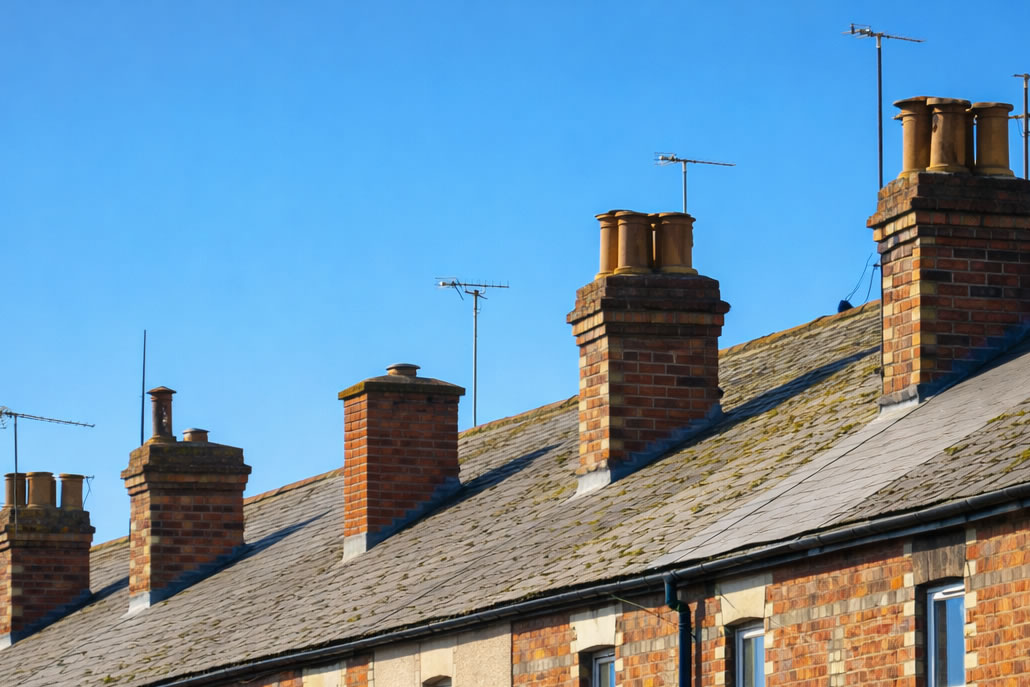
Chimneys are one of the most exposed parts of many UK homes. They take the full hit from wind, rain, frost and temperature changes — and over time that can lead to leaks, loose brickwork, crumbling mortar, and even structural movement.
If you’ve noticed damp patches near a chimney breast, bits of mortar on the ground, or a chimney that looks like it’s “leaning” slightly, it’s worth acting sooner rather than later. Small chimney repairs are usually far cheaper than major rebuilds — and they often prevent water from getting into roof timbers, loft insulation and internal plaster.
This guide explains what typically goes wrong, how repairs are done, what affects cost, and how to compare quotes properly.
Quick warning signs your chimney needs attention
- Damp patches on upstairs ceilings or around the chimney breast
- Water staining on chimney bricks or inside the loft
- Missing, cracked or loose mortar joints
- Spalling bricks (brick faces flaking/crumbling)
- Leaning chimney stack or visible cracking
- Loose chimney pots or a damaged chimney cowl
- Debris (mortar/bricks) found in the garden or on the roof
- Dripping noises after heavy rain / during windy storms
The most common chimney repair jobs (and what they mean)
| Chimney issue | What it usually means | Typical repair solution |
|---|---|---|
| Crumbling mortar joints | Weathering + frost damage over time | Repointing (raking out and redoing mortar) |
| Leaks around the base | Failed leadwork/flashings or cracked soakers | Lead flashing repair/replacement |
| Water getting in from the top | Missing/damaged cowl, pot issues, broken flaunching | New cowl, pot repairs, flaunching repair |
| Loose bricks or bulging stack | Structural deterioration | Partial rebuild or full rebuild |
| Brick faces flaking (spalling) | Trapped moisture/frost damage | Replace damaged bricks + repoint |
| Birds nesting / downdraught | No cowl or unsuitable terminal | Bird-guard / anti-downdraught cowl |
| Chimney not used but still leaking | Open flue drawing damp, damaged cap | Chimney cap/vented cap solution |
Repointing vs rebuilding: which one do you need?
A lot of homeowners get told they need a rebuild when repointing might be enough (or vice versa). Here’s a simple comparison.
| Option | Best when | Pros | Cons |
|---|---|---|---|
| Repointing | Mortar is degraded but bricks are generally sound | Lower cost, restores weather resistance | Won’t fix severe movement or rotten bricks |
| Brick replacement + repointing | Some bricks are damaged/spalling | Targets weak areas without full rebuild | Can still be labour-heavy depending on access |
| Partial rebuild | Top section is unstable, or damage is localised | Safer than patch repairs for structural issues | More expensive than repointing |
| Full rebuild | Stack is leaning, heavily cracked, or unsafe | Long-term fix, restores structural integrity | Highest cost, most disruption |
What affects chimney repair cost in the UK?
Chimney prices vary a lot because access and safety are a big part of the job.
Main price factors:
- Access and height (2-storey vs 3-storey; steep pitch roofs)
- Scaffolding needs (often the biggest variable)
- Extent of damage (patch repair vs full rebuild)
- Leadwork complexity (valleys/abutments are more involved)
- Materials (matching bricks, lime mortar on older properties)
- Location (labour rates vary regionally)
- Weather window (winter work can slow down)
Typical chimney repairs: example cost ranges (guide only)
| Job type | Typical cost range (UK) | Notes |
|---|---|---|
| Minor pointing / small patch repair | £150–£450 | Often possible from ladder for small areas (case-by-case) |
| Chimney repointing (typical stack) | £400–£1,200 | Depends on access + how much needs doing |
| Chimney lead flashing repair/replacement | £350–£1,000 | More if complex roof junctions |
| New chimney cowl / bird guard | £120–£450 | Access is key; includes fitting |
| Flaunching repair (around pots) | £200–£600 | Often paired with pot/cowl work |
| Replace chimney pot(s) | £150–£500 | Per pot, plus access |
| Partial chimney rebuild | £900–£2,500+ | Usually needs scaffold |
| Full chimney rebuild | £1,800–£5,000+ | Size, height and scaffold drive cost |
These are broad ranges to help you sanity-check quotes. The most accurate price always comes from an on-site assessment.
Chimney repairs on older UK homes (Victorian/Edwardian/1930s)
Older properties often need slightly different approaches:
- Lime mortar may be more appropriate than hard cement in some traditional brickwork.
- Bricks may be softer and prone to spalling if moisture can’t evaporate.
- Chimney stacks can be original and exposed, so maintenance is expected over decades.
If you live in a listed building or conservation area, it’s worth checking if any restrictions apply to external appearance (cowls, pots, or rebuild style).
How to compare chimney repair quotes properly
Not all quotes include the same work. Use this checklist to compare like-for-like:
What should be clear in the quote
- Exactly which areas are being repaired (all faces or just one side?)
- Whether scaffolding is included and for how long
- Whether materials and waste removal are included
- If leadwork is involved: what type of flashing and how it’s finished
- Whether bricks are being replaced or just pointed around
- Whether they’re repairing/renewing flaunching and/or fitting a cowl
- Any guarantee/warranty and what it covers
- Timescale, start date, and working days on site
A quick quote comparison table you can use
| Quote item | Contractor A | Contractor B | Contractor C |
|---|---|---|---|
| Scaffold included | |||
| Repointing scope | |||
| Lead flashing work | |||
| Replace bricks included | |||
| Flaunching/pots/cowl | |||
| Waste removal included | |||
| Guarantee details | |||
| Total price |
Copy that into your notes when you’re comparing.
Can chimney leaks be “just a bit of sealant”?
Be cautious with “quick fixes.” Sealants and surface coatings can sometimes hide problems temporarily, but if mortar joints or leadwork are failing, water will often find another path. A proper repair usually involves:
- raking out loose mortar and repointing, and/or
- renewing lead flashings correctly, and/or
- addressing the top of the stack (flaunching/cowl/pots)
How long do chimney repairs take?
Most chimney jobs are relatively quick once access is in place:
- Minor repair: 1–3 hours
- Repointing + leadwork: 1–2 days
- Partial rebuild: 1–3 days
- Full rebuild: 2–5 days (plus scaffold schedule)
Bad weather can extend timelines (especially with mortar work).
Frequently asked questions about chimney repairs
How do I know if my chimney is leaking or the roof is leaking?
Leaks often show up as damp around the chimney breast or staining near the stack in the loft. A roofer will typically check lead flashings, mortar joints, and the chimney top (flaunching/cowl) to pinpoint the cause.
Do I always need scaffolding for chimney repairs?
Not always, but often. Chimneys are high-risk work areas and safe access matters. Even if the repair itself is small, scaffolding may be recommended for safe working conditions.
Is repointing messy or disruptive inside the house?
Most of the work is outside. You may notice some vibration and noise, but disruption is usually limited unless internal chimney breast plaster is already damp/damaged.
Should unused chimneys be capped?
Unused chimneys are often capped with a vented solution to reduce rain entry while still allowing airflow. A roofer can advise based on your setup.
Can a damaged chimney be dangerous?
Yes. Loose pots or unstable brickwork can be a safety hazard, especially after storms. If anything looks unstable, treat it as urgent.
Ready to get chimney repair quotes?
If you think your chimney needs repointing, lead flashing repairs, a cowl, or a rebuild, request chimney repair quotes from local roofers. Provide a couple of photos (if safe to take) and a short description — it helps contractors quote more accurately.