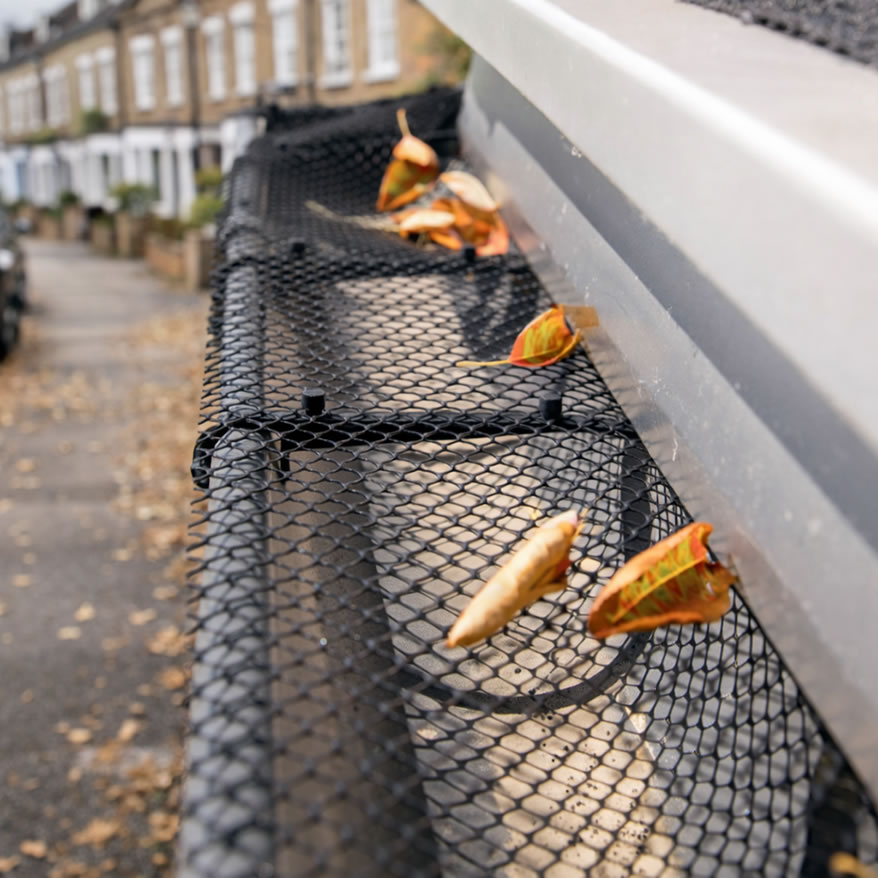
If your gutters keep overflowing, your downpipes block every autumn, or you’re paying for gutter cleaning more often than you’d like, gutter leaf guards can be a sensible upgrade — especially on homes near trees.
This guide explains how gutter leaf guard installation works in the UK, which types suit different properties, what affects the cost, and how to compare quotes properly. I’ve also added simple tables and checklists so you can pick the right system without guessing.
What are gutter leaf guards?
Gutter leaf guards (also called gutter guards or gutter protection) are inserts or covers fitted to gutters to reduce blockages from:
- leaves and twigs
- moss and roof grit
- birds nesting or debris buildup
- overflow caused by slow-draining gutters
They don’t make gutters “maintenance-free”, but they can reduce how often you need cleaning and help prevent repeated blockages.
Who benefits most from gutter guards?
You’ll usually notice the biggest improvement if:
- you have trees nearby (especially overhanging)
- you get frequent gutter overflows in heavy rain
- your gutters block in autumn and winter
- you have awkward access (3-storey homes, extensions, conservatories)
- you’ve had damp patches or water ingress related to overflowing gutters
Types of gutter leaf guards (UK) and how they compare
There isn’t one “best” guard — the right choice depends on debris type, roof pitch, and gutter shape.
Comparison table: common gutter guard types
| Type | What it looks like | Best for | Pros | Cons |
|---|---|---|---|---|
| Brush / bristle guard | Long brush that sits in the gutter | Leaves, small twigs | Quick to fit, easy to remove, good for DIY | Can trap moss; still needs periodic checks |
| Mesh / perforated cover | Mesh or holed strip over gutter | Leaves + general debris | Good flow, neat finish, popular for pro installs | Needs correct fixings; can clog with fine moss |
| Foam insert | Foam wedge inside gutter | Larger leaves | Cheap, easy to install | Can clog with silt; often shorter lifespan |
| Solid cover / helmet style | Rigid cover that sheds water into gutter | Heavy leaf fall areas | Can reduce leaf entry well | Must be fitted correctly to avoid overshoot in heavy rain |
| Downpipe guard | Guard at outlet/downpipe | Homes with downpipe blockages | Helps prevent full blockage | Doesn’t stop gutter fill-up elsewhere |
UK homeowner note: If your roof sheds a lot of moss, mesh systems can work well, but the mesh size and the quality of the installation matter. Some properties need a mix: mesh along runs + downpipe guards.
Typical gutter leaf guard installation costs in the UK
Costs vary mainly by property height, access, gutter length, and guard type. Below are realistic budgeting ranges rather than “too-good-to-be-true” numbers.
Price guide table (budgeting)
| Scenario | Typical cost range | Notes |
|---|---|---|
| DIY supply only (small house) | £40–£200 | Depends on type + length of gutters |
| Professional install (typical 2-storey) | £250–£900 | Often includes minor gutter check/clean |
| Larger/complex installs (many elevations) | £600–£1,800+ | More gutter length + tricky access |
| 3-storey / difficult access | £900–£2,500+ | May need specialist access/scaffold |
| Downpipe guards only | £30–£150 | Often added to a full install |
What increases price the most:
- height (2-storey vs 3-storey)
- conservatories/extensions below gutter runs
- awkward access or narrow side alleys
- multiple roof elevations
- gutters needing repair/realignment first
- heavy moss contamination requiring pre-clean
Installation process: what actually happens on the day
Most professional installations follow a similar pattern. Here’s what you should expect.
1) Quick inspection of the roofline
Installers will usually check:
- gutter alignment and falls (water must flow to outlets)
- joints/leaks/sagging sections
- downpipe outlets (common choke point)
- signs of overflow staining on fascias/brickwork
If gutters are badly misaligned or leaking, it’s often best to fix that first — guards won’t solve structural gutter issues.
2) Clean and clear (if required)
If the gutter is full of silt or decomposed leaves, fitting guards over the top can lock in the problem. A proper job usually includes:
- removing bulk debris
- clearing outlets
- checking downpipes flow freely
3) Fit the chosen guard system
How it’s fitted depends on type:
- Brush: cut to length, placed into gutter run, checked around outlets
- Mesh: measured, fixed securely, overlapped at joins, shaped around corners
- Foam: trimmed and inserted, checked for outlet clearance
- Solid cover: mounted with correct angle and fixing points for water capture
4) Final flow test
Many installers will pour water or test with a hose to confirm:
- water enters the gutter properly
- flow reaches outlets without pooling
- downpipes drain freely
- guard doesn’t lift or rattle
Choosing the right system for your property
Use this quick “matchmaker” guide.
If your main issue is… large leaves
- Brush or larger-aperture mesh tends to work well.
If your main issue is… moss and fine debris
- A well-fitted mesh system is often the better starting point, plus periodic checks.
If your main issue is… downpipes blocking
- Add downpipe guards and make sure outlets are cleared and sized correctly.
If your main issue is… overflow in heavy rain
- Guards must be compatible with your roof pitch and gutter capacity. Poorly fitted “cover” systems can overshoot in storms.
Popular UK-style options (examples, not endorsements)
Homeowners commonly come across:
- brush-style systems (often sold as “gutter brush” or “hedgehog-style”)
- mesh strip systems designed for uPVC gutters
- foam inserts sold in DIY packs
- rigid cover systems marketed as “no-clog” styles
When comparing, focus less on brand name and more on:
- guard type + fit method
- warranty and installer experience
- whether your debris type is mainly leaves or moss
DIY vs professional installation (what’s best?)
DIY can work well if:
- it’s a single-storey/low-access property
- you’re comfortable with ladders (safely)
- gutters are already in good condition and clear
- you’re using simple brush/foam systems
Professional install is usually better if:
- the home is 2–3 storey
- access is over conservatories/extensions
- gutters need re-aligning, sealing, or repairs
- you want mesh/cover systems fitted neatly and securely
- you’ve had recurring blockages and want it solved properly
Safety note: ladder work around roofs is a common cause of accidents. If access is awkward, get a professional.
Common mistakes that cause gutter guards to “not work”
| Mistake | What happens | Better approach |
|---|---|---|
| Installing over dirty gutters | Silt stays trapped; outlets block | Clean first, then fit |
| Ignoring downpipes | Gutter still overflows | Clear/test outlets and downpipes |
| Wrong guard type for moss-heavy roofs | Guard clogs quickly | Choose mesh size/type suited to debris |
| Poor fixing or gaps | Debris gets in, guard lifts | Proper fixings and overlaps |
| Not checking after storms | Small issues become big blockages | Quick seasonal inspections |
Maintenance: are gutter guards truly “maintenance-free”?
Not quite — but maintenance should be reduced.
A sensible routine:
- quick check after autumn leaf fall
- check after major storms
- clear any debris that collects on top of mesh
- check downpipes run freely
If you’re near heavy tree cover, even guarded gutters benefit from a quick annual check.
Get quotes: what to include (so pricing is accurate)
When requesting quotes for gutter leaf guard installation, include:
- postcode area
- property height (storeys)
- approximate gutter run lengths if you know them
- photos from ground level (front/back elevations)
- note if there’s a conservatory/extension below
- mention whether debris is mainly leaves or moss
- whether you want supply only, install only, or supply + install
FAQs: gutter leaf guard installation (UK)
Are gutter leaf guards worth it in the UK?
Often yes, especially near trees or where access makes frequent cleaning expensive. They reduce blockages, but you should still do occasional checks.
Do gutter guards stop moss?
They can reduce moss entering the gutter, but fine moss can still accumulate. Mesh choice and occasional maintenance matter.
Will gutter guards cause overflow in heavy rain?
Some poorly fitted cover systems can overshoot if water isn’t captured correctly. A proper installation should be tested for flow.
Can I install gutter guards myself?
On single-storey or easy-access areas, many homeowners do. For 2–3 storey properties or awkward access, professional fitting is safer.
Do I still need gutter cleaning?
Usually less often, but not never. Think “reduced maintenance”, not “maintenance-free”.