Deciding whether to replace gutters or repair them starts with the condition of the whole rainwater route. One leaking joint on otherwise sound guttering may justify a local repair. Several split lengths, failing fittings or repeated faults across a run make replacement worth pricing. Overflow alone does not settle the question: a blockage or a drainage problem could remain even after new gutters are fitted.
The useful comparison is between clearly described solutions to the same problem. Before accepting a quote, ask what has failed, what the contractor proposes to keep and how they will check that water reaches the intended discharge point afterwards.
Start with the fault, not the age of the gutters
From a safe position on the ground, note where water escapes and when it happens. A drip beneath one connection, water spilling along a long stretch and a downpipe backing up are different observations. Photographs of the whole elevation help a contractor understand both the symptom and the access.
Ask the inspecting firm to distinguish debris, damaged components, poor alignment and problems further down the system. If cleaning is the first recommendation, find out whether the visit includes checking outlets and downpipes. Our gutter cleaning quote page explains that service in more detail.
The SPAB’s guidance on rainwater fittings identifies blockages, inadequate support and deterioration among the causes of failure. It also recommends checking fittings during rain. Prolonged leaks can affect walls and timber, so arrange an inspection rather than repeatedly treating the visible staining.
A joint leak does not always mean the gutter length has failed
A union is the fitting joining two lengths of gutter. Its seal, clips and the way the lengths sit inside it all matter. Ask whether the proposed repair addresses the underlying cause or simply covers the leak temporarily.
FloPlast’s rainwater FAQs explain that incorrect engagement and insufficient allowance for expansion can cause gutters to pull out of a fitting. That is manufacturer-specific guidance, rather than a diagnosis of your property. An installer should identify your system and follow its own fitting instructions.
When to replace gutters or repair the existing system
These are starting points for a survey, rather than instructions to replace a particular component yourself. A good proposal explains why the chosen scope suits the condition found.
| What the inspection finds | Option to discuss | Question before accepting |
|---|---|---|
| Debris, with usable lengths and fittings | Cleaning and a flow check | Are outlets and downpipes included? |
| One failed fitting or a small damaged section | Targeted repair | Can a compatible replacement be obtained? |
| Several faults confined to one elevation | Replacement of that run | How will it connect to the retained system? |
| Widespread damage or recurring failures | Full guttering replacement | Which downpipes and fittings are included? |
| Unsound supporting roofline boards | Separate roofline assessment | What needs replacing before gutters are fixed? |
Repair: a defined fault in a serviceable system
A repair proposal should name the affected location and component. “Replace rear gutter union and check the adjacent supports” is easier to compare than “repair gutters”. It also gives you something concrete to check at handover.
Compatibility deserves attention. Colour and general shape are not enough to establish that fittings match. Ask the contractor to confirm the manufacturer or suitable adaptor, and whether the adjoining gutter remains sound enough to retain. A cheap fitting is poor value if it cannot seal correctly against the existing profile.
Partial replacement: renew a run with a clear boundary
There is often a middle option between one repair and replacing everything. A rear run may need renewal while the front remains usable. Ask for the start and end points to be shown, including the outlet and connection to any retained downpipe.
For terraced or semi-detached homes, mention any shared gutter or pipe. Establish which parts serve your property and discuss connections with the neighbour before agreeing changes that could affect their rainwater route. Do not assume that a visible joint is the ownership boundary.
Full replacement: price the whole working system
When faults are widespread, ask for a replacement option alongside any substantial repair proposal. Compare the retained components and the uncertainty attached to them, rather than counting only the number of new gutter lengths.
On an older property, retaining repairable historic rainwater fittings may be preferable. If the house is listed or has other heritage constraints, ask the relevant local authority what approvals apply before changing materials or appearance.
Compare the scope before comparing guttering replacement prices
For initial budgeting, guttering replacement prices can help you explore the services available and request property-specific quotations. A guide price cannot establish whether your job needs new downpipes, difficult access or supporting timber repairs. Get those points written into the quote before using the total to choose a contractor.
This is a scope and decision guide, so it does not set a universal installed price. A single figure would hide too many differences between a short accessible run and a complete roofline job above a conservatory.
- Extent: identify each elevation, approximate run length and components being retained.
- Materials: name the gutter profile, manufacturer, material and colour, with matching fittings.
- Downpipes: list outlets, bends, pipe lengths, wall clips and discharge connections included.
- Access: confirm the equipment allowed for and any space the contractor needs.
- Removal: include taking down the old system and removing the resulting waste.
- Supporting boards: separate fascia or soffit work from rainwater goods.
- Checks: describe the inspection or flow check after the work.
- Payment: show the total in pounds, VAT where applicable, any survey charge and payment stages.
Ask how uncertain work will be priced
Some defects may only become clear after old components are removed. Ask what is already included, what is an allowance and what would need a separate price. Agree that additional work requires your approval before it starts, with photographs or an explanation of the finding.
For example, two quotations may both say “replace rear gutters”. One could include the downpipe and access equipment, while the other retains the pipe and excludes access. Request a revised breakdown for the same scope; the totals are not comparable yet.
Keep fascia and soffit work specific
The fascia is the board at the roof edge; the soffit is the underside of the eaves. If the quote adds roofline renewal, ask whether existing boards are being removed or covered, and how any existing ventilation will be maintained. Request photographs of defects used to justify the extra work. Our fascia and soffit enquiry page is useful when those components need their own assessment.
Ask for product and workmanship guarantees separately, including the duration, exclusions and who handles a claim. A guarantee should accompany a clear specification, not substitute for one.
How to prepare a guttering repair or replacement enquiry
You will need: your postcode, a phone or camera, somewhere to record observations and any previous repair paperwork. Stay on the ground; this process prepares an enquiry and does not involve climbing or dismantling fittings. HSE’s work-at-height guidance explains the need to assess and control falls. Leave elevated inspection and access arrangements to the contractor.
- Record the symptom. Note where water escapes and whether it happens in ordinary rain or only a downpour, from a safe ground-level position.
- Photograph the elevation. Take a wide view that shows the affected run and any conservatory, narrow passage or other access obstacle.
- Gather previous repair details. Record what was done, when the fault returned and any known gutter manufacturer or material.
- Request defined options. Ask for the diagnosis and, where suitable, separate prices for repair, partial replacement and full replacement.
- Confirm the complete quotation. Check inclusions, VAT, access, waste, additional-work approval and completion checks before booking.
Frequently asked questions
Should I replace all my gutters because one joint leaks?
Not automatically. Ask for the joint, adjacent lengths and supports to be inspected. A compatible repair may be appropriate if the rest of the system is sound.
Will larger gutters stop overflowing?
Only if capacity is the relevant problem and the rest of the route can handle the flow. Blockages, alignment, outlets, downpipes and the discharge point should be checked before specifying a larger profile.
Can existing downpipes stay when gutters are replaced?
Possibly, if their condition, capacity and connections suit the new system. The quotation should identify retained downpipes and explain any adaptors or checks needed.
Do fascias and soffits always need replacing too?
No. Ask the contractor to assess their condition and the fixing surface. Price necessary roofline work separately and request a clear explanation of any defects.
What if a recent gutter repair starts leaking again?
Contact the original contractor with photographs and the repair date. Ask them to explain the recurrence and any applicable workmanship cover before paying for another unrelated patch.
Get a quote for the work your home actually needs
If the inspection points towards renewal, use our guttering replacement quote service and include your observations, access details and preferred scope. If you are still unsure, say so: request an assessment and a written explanation of the recommended work. A useful quotation turns “the gutters leak” into a defined job you can compare.
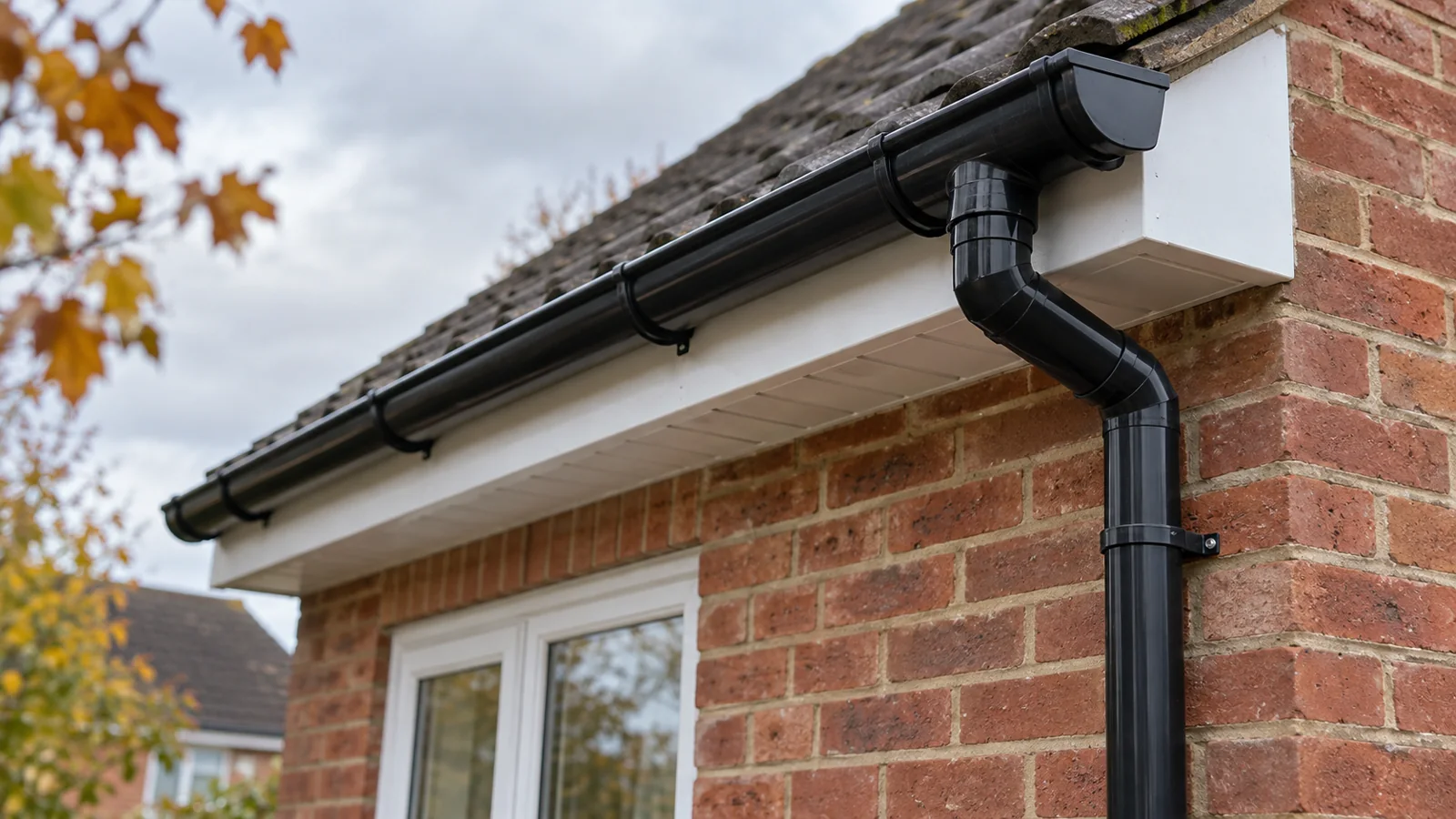
Guidance researched on 14 October 2026 for UK homeowners. Featured image is an AI-generated illustration, not a completed contractor project.