If your home was built or refurbished in the past, it’s normal to worry about asbestos — especially when you’re planning improvements like a new kitchen, replacing ceilings, removing old floor tiles, or repairing a garage roof.
The good news is: asbestos isn’t automatically dangerous if it’s in good condition and left undisturbed. The risk increases when materials are damaged, drilled, sanded, cut, or removed, because fibres can be released into the air.
This guide explains where asbestos is commonly found, when you need a survey, what affects the cost of removal, and how to choose the right specialist — without turning it into a scary science lesson.
Important: If you suspect asbestos, don’t disturb it. Get professional advice and, where appropriate, a survey before starting work. UK guidance on licensed/non-licensed asbestos work and NNLW is set out by the HSE.
Where asbestos is commonly found in homes
Asbestos was used for heat resistance, strength, and insulation. It can still be found in some properties built or renovated before asbestos bans took effect.
| Area of home | Possible asbestos-containing materials (ACMs) | Common scenario |
|---|---|---|
| Garage / outbuildings | Cement roof sheets, wall panels | Old asbestos garage roof replacement |
| Roof & roofline | Some soffit boards, cement panels | Repairs, replacements, drilling |
| Ceilings | Textured coatings (e.g., old “Artex”-style finishes) | Lighting changes, reboarding |
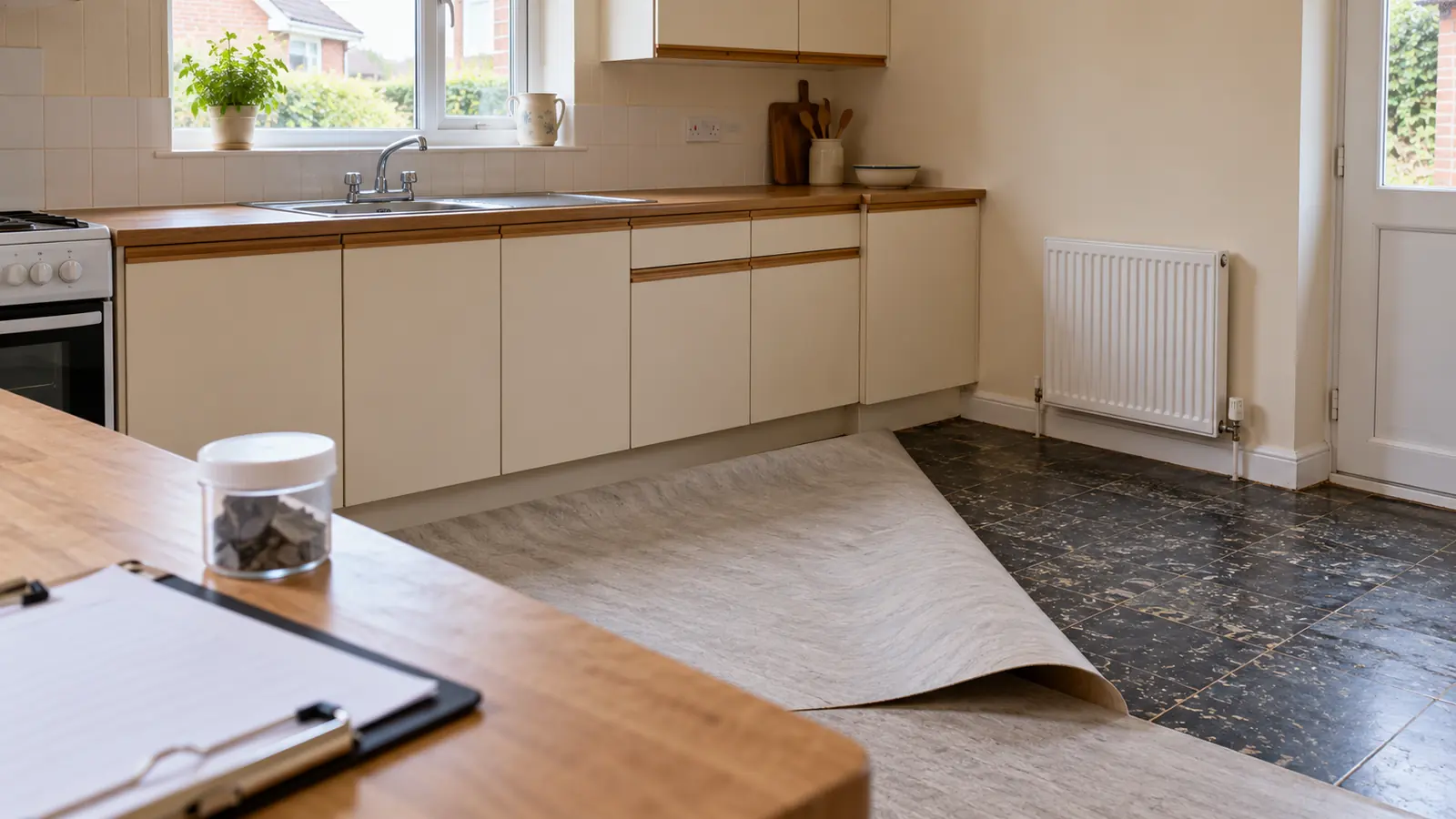
| Floors | Vinyl tiles, bitumen adhesive | Re-flooring, screeding |
| Boilers & heating | Old insulation, boards in cupboards (less common in homes, more in older buildings) | Boiler upgrades |
| Partition walls | Insulating boards (higher risk category) | Refurbs / knock-throughs |
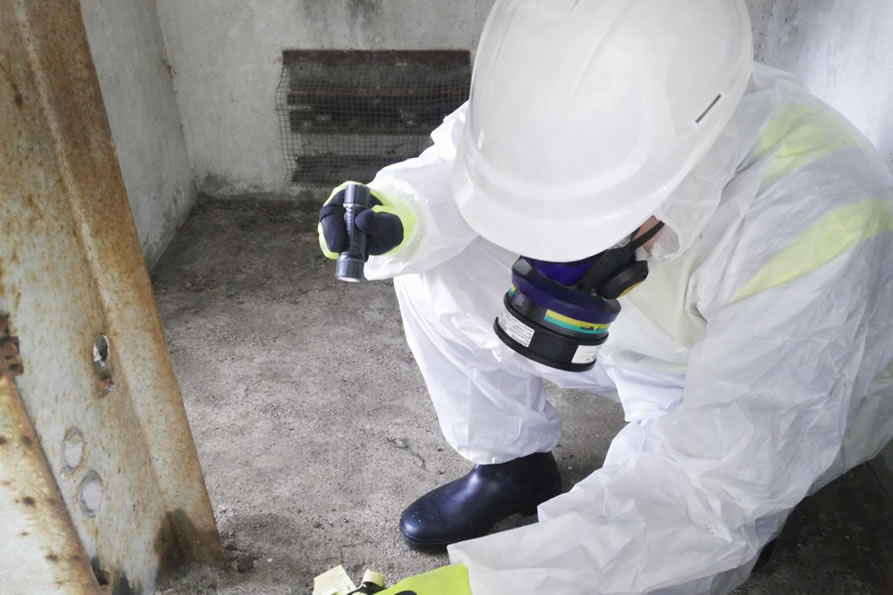
Not every “old-looking” product contains asbestos — the only way to confirm is sampling and lab analysis via a competent professional.
Do you need an asbestos survey?
If you’re simply living in a property and not disturbing materials, you may not need a survey immediately. But if you’re planning building work, a survey is often the sensible (and sometimes essential) next step.
HSE explains two main survey types used to manage and identify ACMs before work: management surveys and refurbishment/demolition surveys.
Survey types comparison
| Survey type | Best for | What it involves | When to get it |
|---|---|---|---|
| Management survey | Normal occupation / day-to-day management | Identifies likely ACMs that could be disturbed during normal use; supports an asbestos register/plan | Buying/owning older property, landlord duties, general awareness |
| Refurbishment/Demolition survey | Any refurbishment, strip-out or demolition | More intrusive; designed to find ACMs where building fabric will be disturbed | Before renovations (kitchens, bathrooms, knock-throughs, rewires, garage roof replacement) |
Licensed vs non-licensed asbestos work (and what “NNLW” means)
In the UK, asbestos work is assessed by risk. Some higher-risk work must be done by licensed contractors, while certain lower-risk tasks may be non-licensed — with an important middle category called Notifiable Non-Licensed Work (NNLW).
HSE provides guidance on:
- Licensable work (requires an HSE licence)
- Non-licensed work
- NNLW (some non-licensed work that still requires notification and additional controls)
Quick comparison table
| Category | Typical risk | Who should do it | Key notes |
|---|---|---|---|
| Licensed work | Higher risk (more friable materials, higher fibre release potential) | HSE licensed asbestos contractor | If work is licensable, a licence is required. |
| Non-licensed work | Lower risk (materials in good condition, low disturbance) | Trained competent workers/contractors | Still requires proper controls; risk-based decision. |
| NNLW | Higher risk than standard non-licensed | Competent contractors following NNLW requirements | Often applies if ACM is in poor condition or work will substantially damage material; HSE outlines examples and requirements. |
Homeowner takeaway: don’t try to self-categorise. If asbestos is suspected, get advice from a competent surveyor/removal specialist who can confirm what’s needed.
Asbestos removal vs encapsulation (what’s the difference?)
Removal isn’t always the only option. If a material is stable and unlikely to be disturbed, encapsulation (sealing it) may be recommended instead of removing it.
| Option | What it means | When it’s used | Pros | Cons |
|---|---|---|---|---|
| Removal | ACM is safely removed and disposed of | When ACM will be disturbed, damaged, or is deteriorating | Eliminates future risk from that ACM | Higher cost; more disruption |
| Encapsulation | ACM is sealed/coated/boarded over | When ACM is in good condition and can remain undisturbed | Often cheaper, quicker, less disruption | ACM remains in place; future works still need care |
What affects asbestos removal cost?
Prices vary widely because asbestos jobs vary widely. Here are the main factors that change the quote:
- Type of ACM (some materials are higher risk than others)
- Condition (damaged materials often mean stricter controls)
- Amount and access (small panel vs full garage roof; tight access; height)
- Work category (licensed vs non-licensed/NNLW)
- Waste handling (packaging, transport, disposal paperwork)
- Location and scheduling (travel, scaffolding, urgency)
Typical quote components (use this to compare like-for-like)
| Line item | What it covers |
|---|---|
| Survey / sampling | Site visit, sample collection, UKAS-accredited lab analysis (where used), report |
| Method statement & controls | Risk assessment, work plan, controls required for the category of work |
| Removal labour | On-site team, PPE, controlled removal methods |
| Enclosure/air management (if needed) | More common in higher-risk/licensed work |
| Waste packaging & transport | Correct bagging/wrapping and transport by registered carriers |
| Disposal paperwork | Hazardous waste documentation, including consignment notes where required |
| Clearance / reassurance | Clean-up; and for some jobs additional checks/testing for asbestos as applicable |
Disposal rules: why paperwork matters
Asbestos waste is treated as hazardous waste, and movements of hazardous waste require the correct paperwork. Government guidance explains that you must use consignment notes to move hazardous waste and that the note must accompany the waste to its final destination.
For homeowners comparing quotes, this matters because proper disposal protects you from:
- fly-tipping risk
- incomplete clean-up
- “cash job” contractors cutting corners
What the asbestos removal process looks like (step-by-step)
Below is a practical overview of what usually happens, from first contact to completion:
- Describe the job
Tell the contractor what you’re planning (e.g., garage roof replacement, ceiling works, refurb). Share photos if possible. - Survey / sampling (if needed)
A competent professional confirms whether asbestos is present and what type of survey is appropriate. - Plan the work
The contractor sets out the method, controls, and whether the work is licensed / non-licensed / NNLW. - Carry out removal or encapsulation
Work is completed using appropriate safety controls. - Waste is transported and disposed of correctly
Hazardous waste consignment note paperwork should be completed where required. - Final tidy and handover
You should receive paperwork/records relevant to the job, including waste documentation.
How to choose the right asbestos contractor (quick checklist)
When comparing quotes, ask each contractor:
- What category is the work (licensed / non-licensed / NNLW) and why?
- What’s included in the quote (access, scaffolding, disposal, making good)?
- How will waste be handled and what paperwork will you provide?
- What’s the realistic timescale and earliest start date?
- Can you provide proof of insurance and relevant credentials?
FAQs: asbestos removal for homeowners
Is asbestos always dangerous?
Asbestos is most dangerous when fibres become airborne — typically when materials are disturbed, damaged, drilled, sanded, cut or removed. Get professionals to remove asbestos.
Do I need an asbestos survey before renovation?
If work may disturb building materials (strip-out, drilling, demolition, rewires, ceiling changes), a refurbishment/demolition survey is commonly the correct approach.
What is NNLW?
NNLW stands for Notifiable Non-Licensed Work — some higher-risk non-licensed work that still requires notification and extra requirements under HSE guidance.
Can asbestos waste go in a normal skip?
No — asbestos is hazardous waste and must be handled and disposed of correctly with proper documentation such as consignment notes when applicable.
Should I remove asbestos or leave it alone?
If it’s in good condition and won’t be disturbed, leaving it in place (or encapsulating) may be advised. If it will be disturbed by planned works, removal is often the safer route. Always get professional advice.
How long does asbestos removal take?
It depends on the size, access, and work category. Some small jobs can be completed quickly; larger or higher-control projects take longer due to setup, safety controls, and disposal steps.
Ready to get asbestos removal quotes?
If you’re planning refurbishment, repairs, or removal work and need pricing from reputable professionals, use our quote form to request asbestos removal quotes from local specialists.