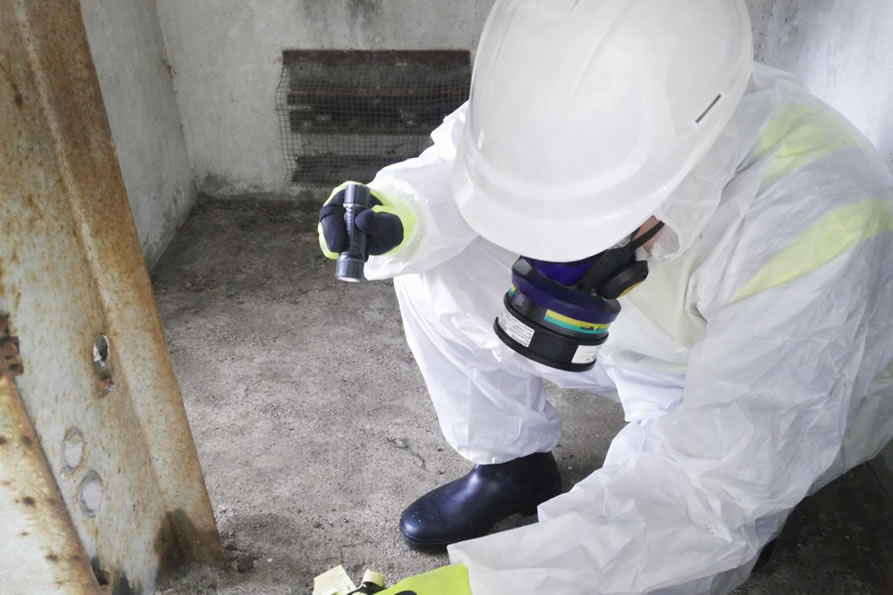
If old floor tiles turn up while you are planning a new kitchen or other flooring work, pause before anyone lifts, sands or scrapes them. Some older tiles, paper backing and black adhesive contain asbestos; appearance alone cannot confirm it. A competent surveyor can assess what is present and arrange analysis where needed. The result helps you decide whether the material can stay undisturbed or needs specialist removal before work proceeds.
This guide is for UK homeowners planning a flooring renovation. It focuses on the decisions and written scope to settle before a fitter starts, rather than giving instructions for handling asbestos. The Health and Safety Executive (HSE) guidance cited below applies in Great Britain; confirm the relevant regulator’s guidance for work in Northern Ireland. Guidance checked on 30 September 2026.
Why old floor tiles and adhesive need a check
Asbestos was used in some PVC and thermoplastic floor tiles, paper-backed flooring and bitumen adhesive. These materials can be hidden under a newer floor. HSE’s guide to where asbestos occurs shows that floor coverings vary in appearance and can be difficult to identify by sight.
Age and colour are clues to discuss with a professional, not a diagnosis. Do not prise up a corner or scrape away adhesive to find out. Tell the flooring contractor what you have noticed before they quote or start preparation. If a tile is already loose or damaged, keep people away from the area and seek specialist advice; avoid further disturbance and ordinary sweeping or vacuuming.
Should you test, leave the floor in place or remove it?
The answer depends on what the material is, its condition and what the proposed renovation would disturb. A sound floor that can remain undisturbed may be managed in place. A plan that involves lifting tiles, grinding adhesive, fixing through the floor or changing levels may require a different assessment. Do not agree to simply cover a suspect floor until the fitter and an asbestos competent professional have considered the full installation method and future access.
| Situation | Question to ask | Useful next step |
|---|---|---|
| Material is only suspected | What parts of the tile, backing and adhesive will the work affect? | Arrange competent assessment and, where needed, representative sampling and analysis. |
| Confirmed material is sound | Can the entire installation avoid disturbing it now and during future maintenance? | Ask for the decision and precautions to be recorded for future tradespeople. |
| Material is damaged or must be disturbed | What removal method, controls and waste arrangements does the specialist propose? | Get a written scope before coordinating the flooring programme. |
HSE says the only definitive way to confirm suspected asbestos is analysis of a representative sample. It recommends a fully trained, competent sampler, and says analysis should be carried out by a suitably accredited laboratory. See its advice on surveyors and analysts. Sampling is a professional task, particularly when the floor has layers with different materials.
HSE also advises that asbestos materials in good condition and unlikely to be damaged are often best left in place and monitored. That is a reason to assess the proposed work carefully, not a blanket instruction to leave every old floor alone. Its asbestos FAQ explains the distinction.
What should an asbestos floor tile removal quote include?
Once the material and proposed flooring work are clear, ask each specialist to price the same scope. You can request asbestos removal quotes for floor tile work through My Asbestos Quotes, which connects enquiries with independent local specialists subject to availability. Speak directly with any responding company about the assessment and method before accepting a price.
A useful written quote should identify:
- The exact area and layers: measured rooms, tiles, paper backing, adhesive and any other suspect material included or excluded.
- The basis for identification: survey or sample results supplied, and who will arrange any missing testing.
- The method and controls: how the contractor has classified the work, whether it is licensed, notifiable non-licensed or non-licensed, and the site precautions proposed.
- Access and protection: whether rooms must be empty, how other occupants and adjoining areas will be protected, and who moves fixtures or appliances.
- Waste and handover: collection, disposal, cleaning, any appropriate inspection or testing, and the records you will receive.
- Commercial details: VAT, start date, duration, exclusions, potential extra work and how variations will be approved.
Do not assume that every asbestos tile job requires an HSE licence, or that “non-licensed” means an untrained fitter can do it. HSE’s floor tile and mastic task sheet describes a non-licensed task, while noting that tiles with asbestos-paper backing make removal notifiable non-licensed work. The classification depends on the actual material and planned method. Ask the contractor to explain their assessment, training and controls; licensing rules also differ in Northern Ireland.
Two prices may look far apart because one includes adhesive removal and disposal while the other covers tiles only. Ask for each omission and provisional item to be written down before comparing totals. Keep the asbestos work separate from the new flooring quote so it is clear who is responsible for each stage and when the fitter can safely return.
How to prepare for a specialist assessment
You need the proposed flooring plan, approximate room measurements and photographs taken without disturbing the floor. These steps prepare information for a competent professional; they are not instructions to sample or remove asbestos.
- Stop work that would disturb the floor. Tell the fitter and anyone else working in the room that suspect material has been found.
- Record what is visible. Note which rooms are affected, where the floor is damaged and what newer covering sits above it. Take photographs from a safe position.
- Describe the planned installation. Explain whether the new floor needs levelling, adhesives, mechanical fixings or changes around doors and appliances.
- Request a defined assessment and quote. Ask what will be sampled, what remains uncertain, which layers any removal price covers and what evidence you will receive at handover.
If the work is part of a wider refurbishment, tell the surveyor the full scope. A sample from one visible tile may not address hidden flooring, adhesive or other materials that the renovation will disturb. Our broader homeowner guide to asbestos removal covers surveys and wider renovation decisions.
Asbestos floor tile FAQs
Can I identify asbestos floor tiles from a photograph?
No. A photograph can help a specialist understand the layout and condition, but representative laboratory analysis is needed to confirm whether a suspect material contains asbestos.
Do intact asbestos floor tiles always need removing?
No. Material in good condition may be left in place if it will not be disturbed. Have the planned flooring method assessed, and record what remains so future workers know about it.
Does a negative tile result also clear the adhesive?
Not necessarily. Tiles, backing and mastic can be different materials. Ask the surveyor which layers were sampled and which parts of the proposed work the report covers.
Can my regular flooring installer remove the tiles?
Do not assume so. The work needs the right assessment, training and controls, and some situations trigger notification or licensing requirements. Ask how the installer is qualified for the specific material and task.
Settle the asbestos scope before booking the new floor
A clear assessment lets you decide whether to leave the old floor undisturbed or arrange specialist work. Share the same findings and flooring plan with each company, compare the written scope as well as the price, and agree when the new flooring contractor can start. If you need a broader home improvement enquiry, Find Me Quotes also has a quote request service.
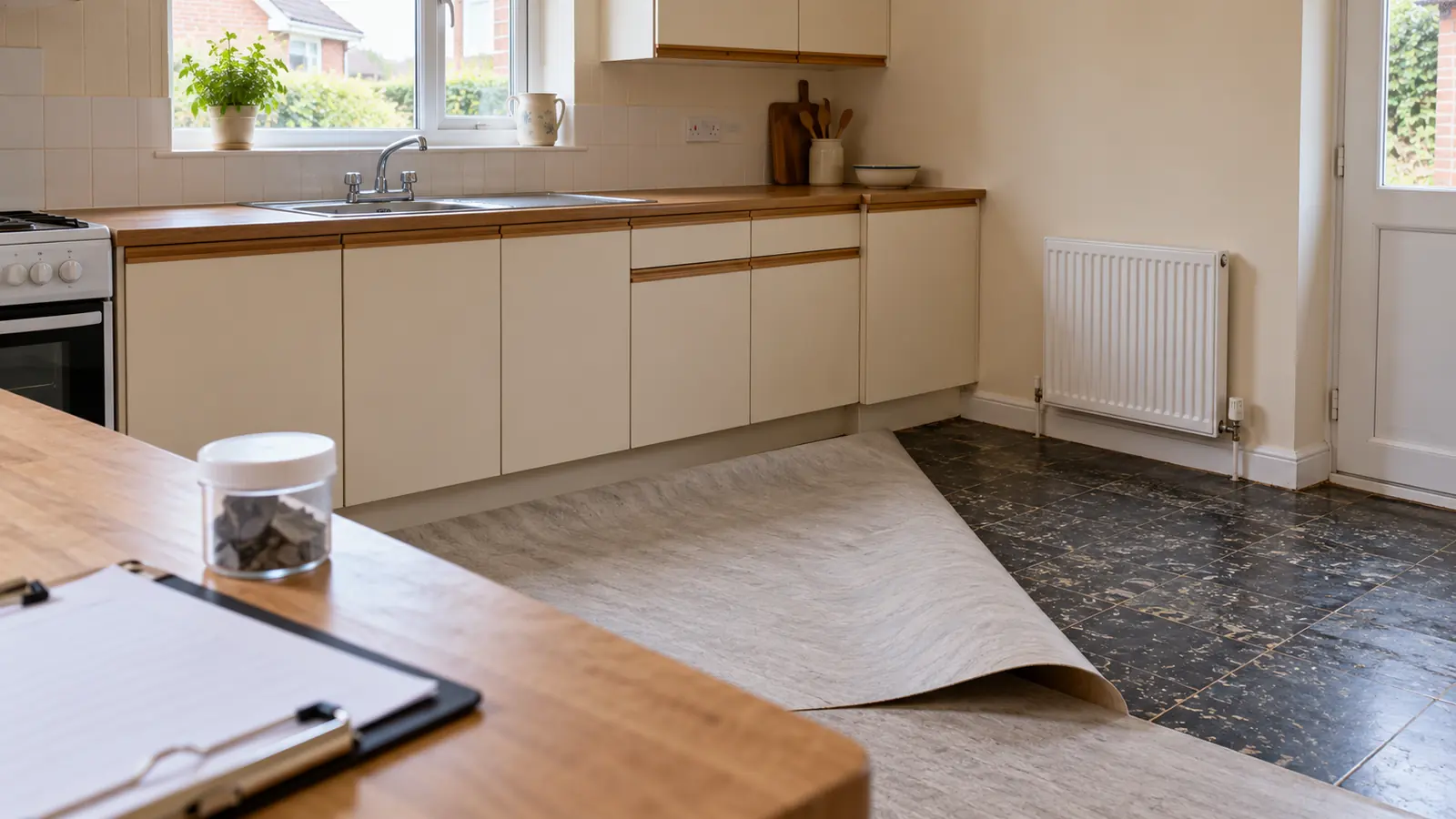
Featured image: AI-generated illustration of an older kitchen floor; it does not show a real property or a completed project.