Misted double glazing does not automatically mean you need a whole new window. If moisture is trapped between the panes and the frame is sound, replacing the sealed glass unit may be enough. If the frame is rotten, distorted or no longer closes properly, a broader repair or full replacement may make more sense.
The useful first question is where the moisture sits. The second is whether the rest of the window still works. Answer those before comparing prices: a quotation for new glass and one for a complete window cover very different jobs.
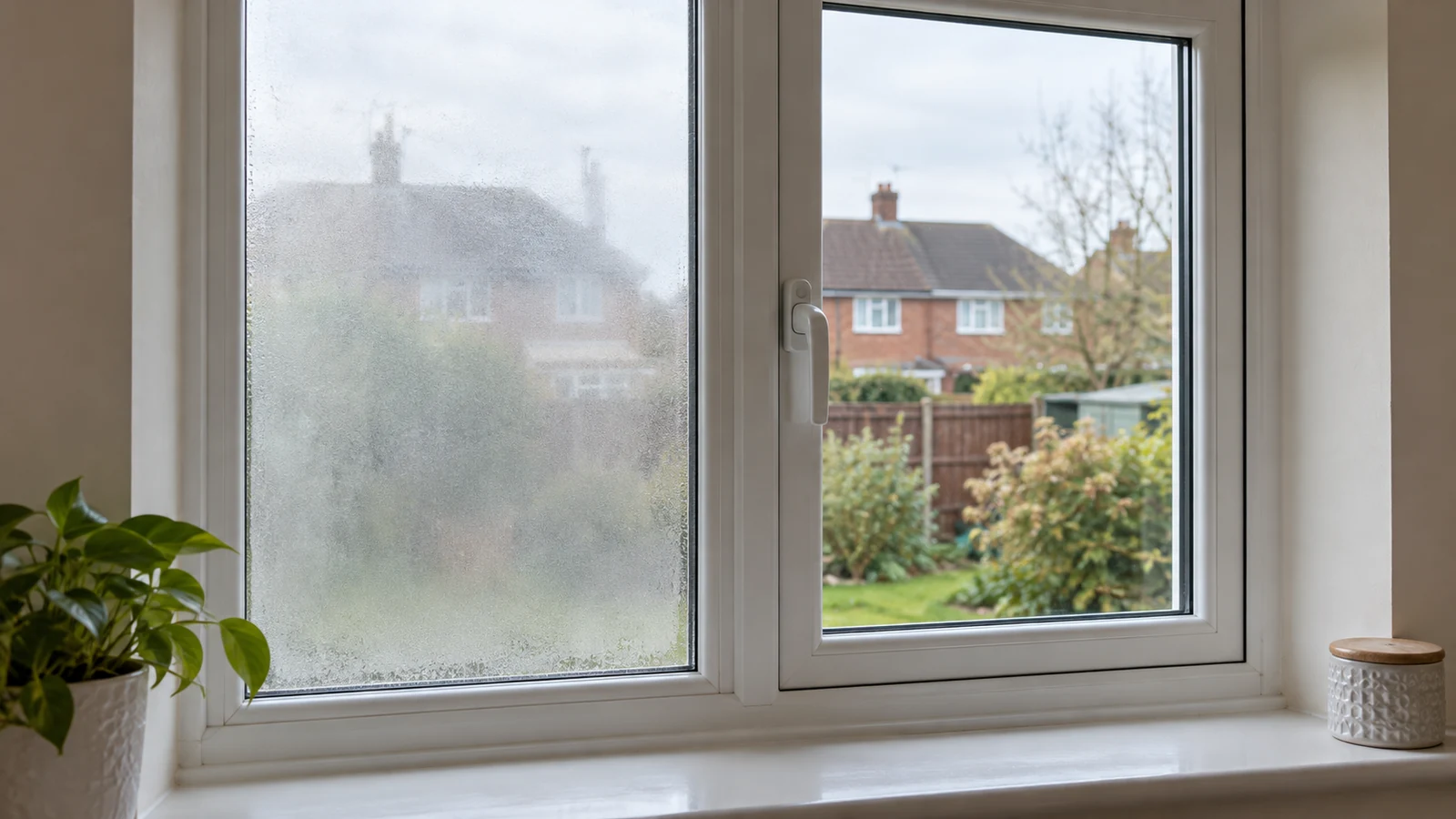
Is your double glazing misted inside the unit?
Look at the window from a safe position indoors. If the glass is intact and accessible, wiping the room-facing surface can help distinguish surface moisture from cloudiness further inside. Do not lean out to test the outside face or reach an upper-floor pane.
- Moisture on the room side: droplets that wipe away from the inner face are surface condensation. Consider ventilation, moisture from cooking or bathing, and room temperature before ordering glass.
- Moisture between the panes: fogging that you cannot reach on either exposed surface usually indicates a failed sealed unit. A glazier should confirm the diagnosis.
- Moisture on the outside: external condensation can occur on efficient glazing in particular weather conditions. It is not, by itself, evidence that the unit needs replacing.
The Energy Saving Trust’s windows and doors guidance explains these distinctions and notes that failed glazing can sometimes be replaced while retaining the window. New glass alone will not remove the moisture produced inside a home. For persistent bathroom surface condensation, our guide to bathroom extractor fan installation covers a related part of the ventilation assessment.
Replace the glass, repair the hardware or replace the window?
A sealed unit is the assembly of glass panes, spacer and edge seal that sits inside the frame. Replacing it is different from replacing the opening sash, hinges or complete frame. Ask the contractor to name each component included in the proposed work.
| What you notice | What to ask about | What that work may leave unresolved |
|---|---|---|
| Trapped mist; sound frame and easy operation | Replacement sealed glass unit | Existing frame appearance, worn hardware or separate draughts |
| Clear glass; draught around an opening sash | Adjustment, hinges, locking mechanism or weather seals | A failed glass unit, if that is also present |
| Rotten timber, distortion or repeated closure problems | Whether a durable frame repair is practical, alongside full replacement | Surrounding damp or building defects that need separate attention |
| Several defects and a wish to change opening style | A complete replacement specification | Room humidity and ventilation issues unless addressed in the design |
These are starting points for a survey, rather than diagnoses from symptoms alone. A draught does not prove the glass seal has failed, and misted glass does not prove the frame is beyond repair.
The Glass and Glazing Federation’s repair or replacement guidance describes replacing failed sealed units with accurately measured replacements. Ask the surveying firm to explain why it recommends keeping or removing your particular frame.
What should the glazier check before recommending new glass?
The survey should establish whether the existing frame and opening parts are worth keeping, and whether a replacement unit can be fitted correctly. Mention sticking handles, rain entering around the opening, cracks and any previous repairs, even if misting is your main concern.
Ask the glazier to check the glazing system, drainage, beads and gaskets as well as the glass size and thickness. A new sealed unit needs to suit the frame; an attractive upgrade description is not enough to establish compatibility. Leave final manufacturing measurements and glass handling to the contractor.
Discuss the room, too. Obscure glass may be appropriate for privacy, and the installer should establish any safety-glass requirements for the pane’s position. If reducing traffic noise or summer overheating is a priority, put that in the brief. Ask for the proposed specification and evidence for its performance rather than assuming any new double glazing will deliver the same result.
If you have an original installation guarantee, check its terms and contact the responsible company before commissioning work. Establish whether the glass unit, installation and other window components have separate cover, and whether there are inspection or claim conditions.
How to compare double glazing quotes for the same scope
Use a numbered list of the affected windows so each contractor prices the same openings. When requesting double glazing quotes, specify whether you want an assessment of glass-only replacement, a complete window replacement, or separately priced alternatives. The linked service introduces homeowners to independent glazing businesses; confirm the actual survey, work and terms with the responding firm.
For a useful written quotation, ask for:
- A window-by-window schedule: room, floor, number of units and exactly which frames or opening parts will remain.
- The glass specification: agreed appearance, privacy glass where required, proposed thermal or acoustic specification and appropriate safety glazing.
- Associated repairs: which beads, gaskets, hinges, locks or adjustments are included, and which are excluded.
- A complete fitted price: labour, access equipment, removal, disposal and VAT treatment, with any minimum visit charge made clear.
- Finishing responsibilities: protection of nearby surfaces, making good and any redecoration left for you to arrange.
- Order and aftercare terms: measuring visit, manufacturing lead time, fitting arrangements, payment stages and written guarantees.
Keep optional upgrades separate from the essential repair. Otherwise one firm may price a straightforward replacement unit while another includes new hardware or a different glass specification, making the totals difficult to interpret.
A practical comparison example
Imagine two bedroom windows have trapped mist, but one also catches when it closes. Ask both firms to price the two sealed units and to list the closure repair separately. If another firm recommends two complete windows, ask what condition it found in the frames that makes retaining them unsuitable. This gives you a reason to assess the larger proposal, rather than treating its higher total as an equivalent offer.
Photographs and approximate sizes help an initial discussion, but they do not make an estimate a final manufacturing order. Confirm what can change after inspection and obtain the final agreed specification before paying a deposit.
If the recommendation is a complete replacement
A full replacement introduces choices beyond clear glass: frame material, opening arrangement, ventilation, finishes and the way the window meets the surrounding wall. Ask how the design will preserve any necessary escape opening and how compliance will be documented for your address.
For England, the Planning Portal’s replacement window building regulations guidance covers matters including thermal performance, safety and ventilation, and explains certification through an appropriate registered installer or building control route. Do not assume a glass-only repair follows the same certification process as a complete replacement.
Wales, Scotland and Northern Ireland have their own requirements and processes. Ask the relevant local authority or building standards service if the proposed route is unclear. Also establish whether listed status, local planning restrictions or lease conditions affect the work before ordering.
How to prepare an enquiry for misted double glazing
You need a notebook or document, any existing guarantee paperwork, approximate sizes if safely available, and photographs taken from normal accessible positions. This is preparation for a professional survey; do not remove glazing beads, drill the unit or dismantle the window.
- Identify each affected opening. Give it a number and record the room, floor and whether it opens. Separate windows with mist from those with only draughts or sticking handles.
- Record when the problem appears. Note whether moisture wipes off the inner surface, stays trapped or appears only outside in certain weather. Describe uncertainty instead of guessing.
- Photograph the window and its surroundings. Include the whole frame and any accessible problem area. Mention restricted access above an extension or conservatory without climbing to inspect it.
- State the result you want. Explain whether your priority is clear glass, easier operation, less draught or a different opening style. Request separate repair and replacement options where useful.
- Send the same brief to each firm. Request a survey and an itemised fitted quotation. Resolve differences in the proposed scope, exclusions and guarantees before choosing an installer.
Frequently asked questions
Can just one misted pane be replaced?
Often, yes: a glazier can replace one failed sealed unit if the surrounding frame and glazing system remain suitable. Describe it as one affected unit, since a double glazed unit contains more than one sheet of glass. Ask for the total fitted charge.
Will changing the rubber seal around the window clear trapped mist?
A visible weather gasket and the sealed unit’s edge seal have different jobs. Replacing a weather gasket alone does not repair a failed seal inside the glass assembly. Ask which seal has failed and what the proposed repair will actually replace.
Do all the windows need replacing if one unit has failed?
One failed unit does not establish that every window needs replacement. Ask for a condition assessment of each affected opening. A wider project should have a clear reason, such as multiple deteriorated frames or an agreed change in specification.
Will replacing misted glass stop condensation in the room?
Replacing a failed sealed unit addresses moisture trapped within that unit. Room-side condensation has other contributing factors, including moisture production, ventilation and surface temperature. Ask for those to be considered if droplets or mould persist indoors.
Start with a diagnosis and a clear brief
Ask what has failed, what can remain and what the finished job will include. If a survey supports complete replacement, explore our uPVC double glazing enquiry page with your window schedule ready. A clear scope makes the quotes easier to compare and gives you a written record of the work you are buying.
Featured image: AI-generated illustration of a domestic window, not a photograph of a completed Find Me Quotes project. Guidance researched on 16 October 2026.