To compare air source heat pump quotes fairly, ask every installer to price the same completed heating system. Check the survey, radiator changes, hot-water provision, electrical work and handover before comparing the amount you would pay after any grant. A lower headline figure is only useful if it covers the work your home needs.
This guide concerns air-to-water systems connected to a home’s wet central heating, rather than air-conditioning units that heat rooms directly. It is for homeowners replacing an existing heating system who want to turn competing proposals into a clear buying decision.
Research checked on 17 October 2026. Funding and VAT information can change; confirm the position for your property before signing.
Start with the same property brief
One installer might assume that your radiators stay, while another includes several replacements. One might allow for a new cylinder cupboard; another may expect you to arrange the joinery separately. Those are different offers, even if both are headed “heat pump installation”.
Give each company the same description of your current heating, household hot-water needs and planned building work. Mention rooms that are difficult to heat, extensions being considered and any limits on indoor storage space. Ask whether the first figure is a budget estimate, a survey-based quotation or a price with provisional allowances.
For background on air source heat pump cost, the linked specialist referral site explains the types of work that can sit behind an installation price. Use that context to build your questions, then ask installers for a written proposal specific to your home.
What should air source heat pump quotes include?
Make a comparison sheet with a column for each installer. Mark an item “not confirmed” where the paperwork is silent. An unanswered question should not quietly become an assumption that the work is included.
| Part of the proposal | Ask for in writing | Why it matters |
|---|---|---|
| Survey and design | Room-by-room heat requirements and design assumptions | Shows what the proposed system must deliver |
| Equipment | Exact outdoor model, cylinder and controls | Makes substitutions and specification differences visible |
| Radiators and pipework | A room schedule of retained and changed items | Prevents a vague allowance hiding additional work |
| Installation work | Base, pipe routes, electrics, drainage and making good | Clarifies who organises and pays for each task |
| Commissioning and support | Testing, certificates, controls demonstration and aftercare | Defines what happens after the equipment is fitted |
| Commercial terms | Total including applicable VAT, grant deduction and payment stages | Shows the actual financial commitment |
Ask for exclusions on the same page as the total. Decorating, floor repairs, removing redundant equipment and altering cupboards are easy to overlook. If another contractor must do some work, obtain that price before deciding which proposal offers better value.
Check the design behind the price
Ask how the equipment was selected
Request the survey findings and an explanation of how they lead to the proposed equipment. If two installers recommend different outputs, ask each to explain the difference using the same property information. Bedroom count alone is not a sufficient explanation of a heating design.
The design flow temperature is the temperature of water supplied to the heating circuit under the stated design conditions. Ask the installer to show that assumption alongside the proposed radiators. It gives you something concrete to discuss when one quote includes emitter upgrades and another leaves them out.
Check indoor space and everyday use
Air-to-water heat pumps commonly use stored hot water, and radiator upgrades may be needed. Outdoor airflow also matters. The Energy Saving Trust’s air source heat pump guide explains these considerations and recommends comparing quotes from at least three certified installers.
Ask for the proposed cylinder position, service access and pipe route to be shown during the survey. Discuss shower use and busy mornings, rather than accepting a cylinder description that does not address how your household uses hot water.
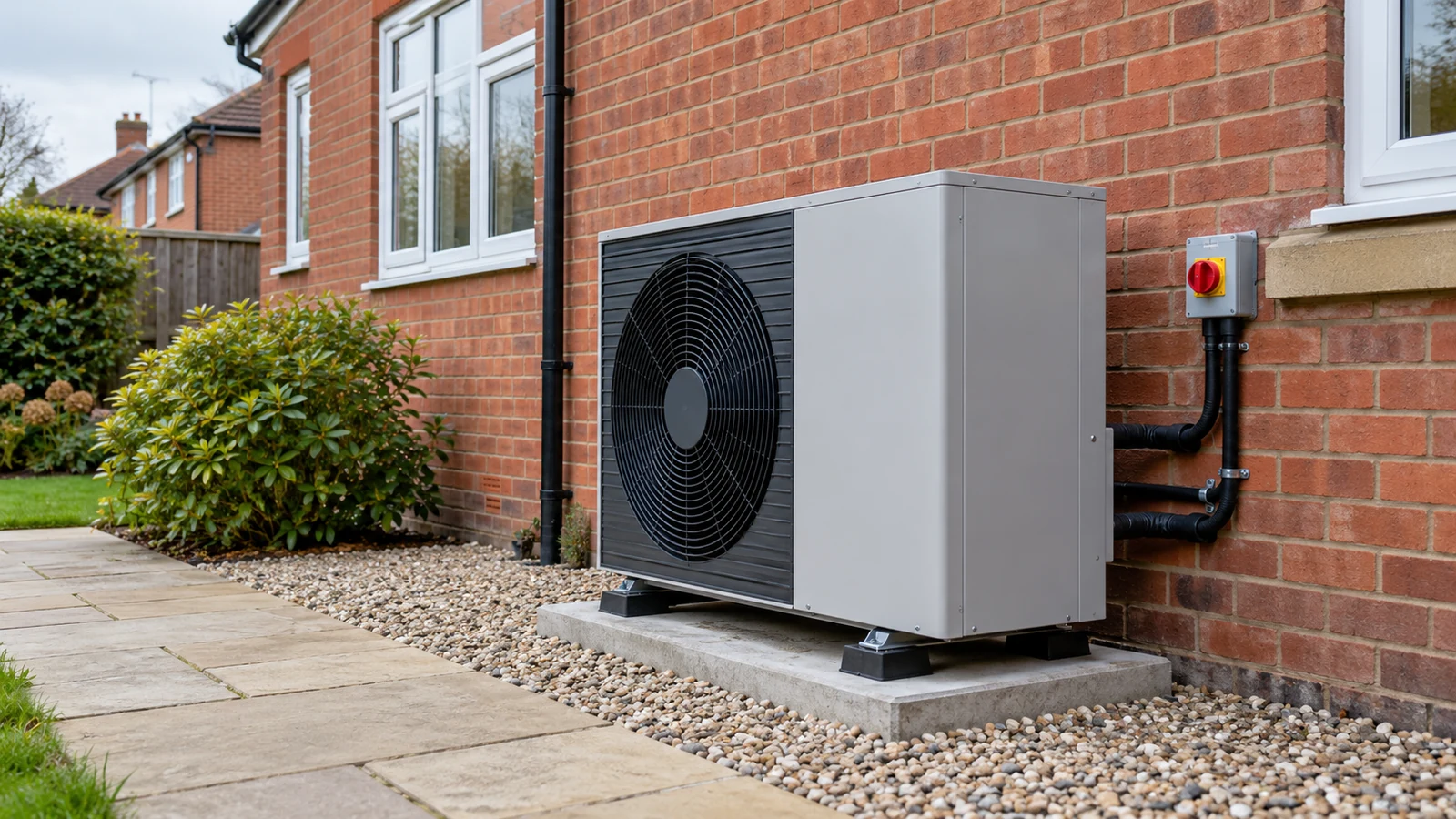
Get the outdoor location agreed too. Ask who will check noise, permissions, any freeholder consent and the manufacturer’s siting requirements. Rules vary across the UK and by property; an installer’s responsibility for these checks should be explicit. Do not treat a neighbour’s installation as confirmation that yours can go in the same place.
Separate grants, VAT and payment terms
A useful quote shows the full contract value, the proposed grant deduction and your remaining payment separately. Ask what happens if funding is refused or the design changes. Make sure the contract explains when the deposit and later payments become due.
For eligible projects in England and Wales, the Boiler Upgrade Scheme currently offers £7,500 towards an air-to-water heat pump. Until March 2027, an extra £1,500 is available where the property is heated by oil or LPG and has no mains gas connection. Eligibility restrictions apply, including exclusions for hybrid systems and replacement of existing low-carbon heating. Check the current government grant amounts and conditions. Scotland and Northern Ireland have separate funding arrangements; do not apply the England and Wales deduction automatically.
Ask for the VAT treatment of each part of the job. HMRC lists qualifying residential heat pump installations among energy-saving measures eligible for 0% VAT until 31 March 2027. Separately supplied equipment and other work can have different treatment. The HMRC VAT rates guidance sets out the categories and conditions; the contractor should explain the rate used on your quotation.
For example, if one proposal excludes cupboard alterations and another includes them, add a written price for the missing work before comparing totals. Keep optional improvements separate from work needed to deliver the agreed design. This avoids paying for extras simply because they appear in the most detailed proposal.
Compare running-cost assumptions as well as installation prices
An annual bill estimate needs more than a promising savings figure. Ask each installer to state the assumed annual heat demand, seasonal efficiency, electricity tariff and hot-water use. Keep the assumptions consistent when comparing proposals. Energy Saving Trust notes that running costs depend on system design, controls, tariffs and the heating being replaced; savings are not automatic.
If a projection relies on a special electricity tariff, ask which rate periods and usage pattern it assumes. Check whether the calculation includes supplementary electric heating and whether it assumes that the gas supply will be disconnected. A household still using gas for cooking may have a different bill comparison.
Request the maintenance requirements, likely service arrangements and warranty conditions separately. Ask who handles an early fault, how to contact them and whether labour and replacement parts have different cover. A long product warranty does not answer every question about the installer’s workmanship or response.
How to prepare for heat pump surveys
You need a notebook or document, recent energy bills if available, and safely taken photographs. These steps prepare your brief; system design and installation belong with appropriately qualified professionals. Do not open electrical equipment or remove heating components.
- Record the existing system. Note the heating fuel, boiler or heat pump model if visible, hot-water arrangement and rooms that struggle to stay warm.
- Describe household needs. List usual occupancy, bathroom use, working-from-home patterns and any planned extension or insulation work.
- Photograph possible locations. Take accessible views of the outdoor area, existing radiators and potential cylinder space without removing covers or entering unsafe areas.
- Send an identical brief. Give each installer the same information and ask what their survey costs, what design documents you receive and when a firm quote follows.
- Resolve differences in writing. Compare the equipment, exclusions, funding assumptions and payment terms, then request a revised quotation for any agreed changes.
Frequently asked questions
Should I choose the cheapest heat pump quote?
Choose on the completed scope and design as well as price. A cheaper quote may offer good value, but first confirm that radiator changes, electrical work, commissioning and any excluded work have been allowed for.
Does every radiator need replacing?
Do not assume that every radiator stays or every radiator goes. Ask for a room-by-room schedule explaining which emitters are retained or changed at the proposed design flow temperature.
Can I compare a price before the survey with a firm quote?
Use an early estimate to explore affordability, but keep it separate from a survey-based quotation. Ask which assumptions remain unconfirmed and what could change the final price.
What should I receive at handover?
Agree the list before signing: commissioning records, relevant certificates, warranty details, operating instructions, a controls demonstration and a clear contact for aftercare.
Turn the quotes into a clear decision
Before accepting an offer, you should be able to explain what is being installed, why it suits the property, what you will pay and who deals with problems afterwards. Ask for a revised document if any of those answers relies on a verbal promise.
Ready to start comparing? Use the Find Me Quotes enquiry form to describe your heating project. Include your current system and survey requirements so available professionals can understand the job. You can also browse our home improvement guides while planning related work.