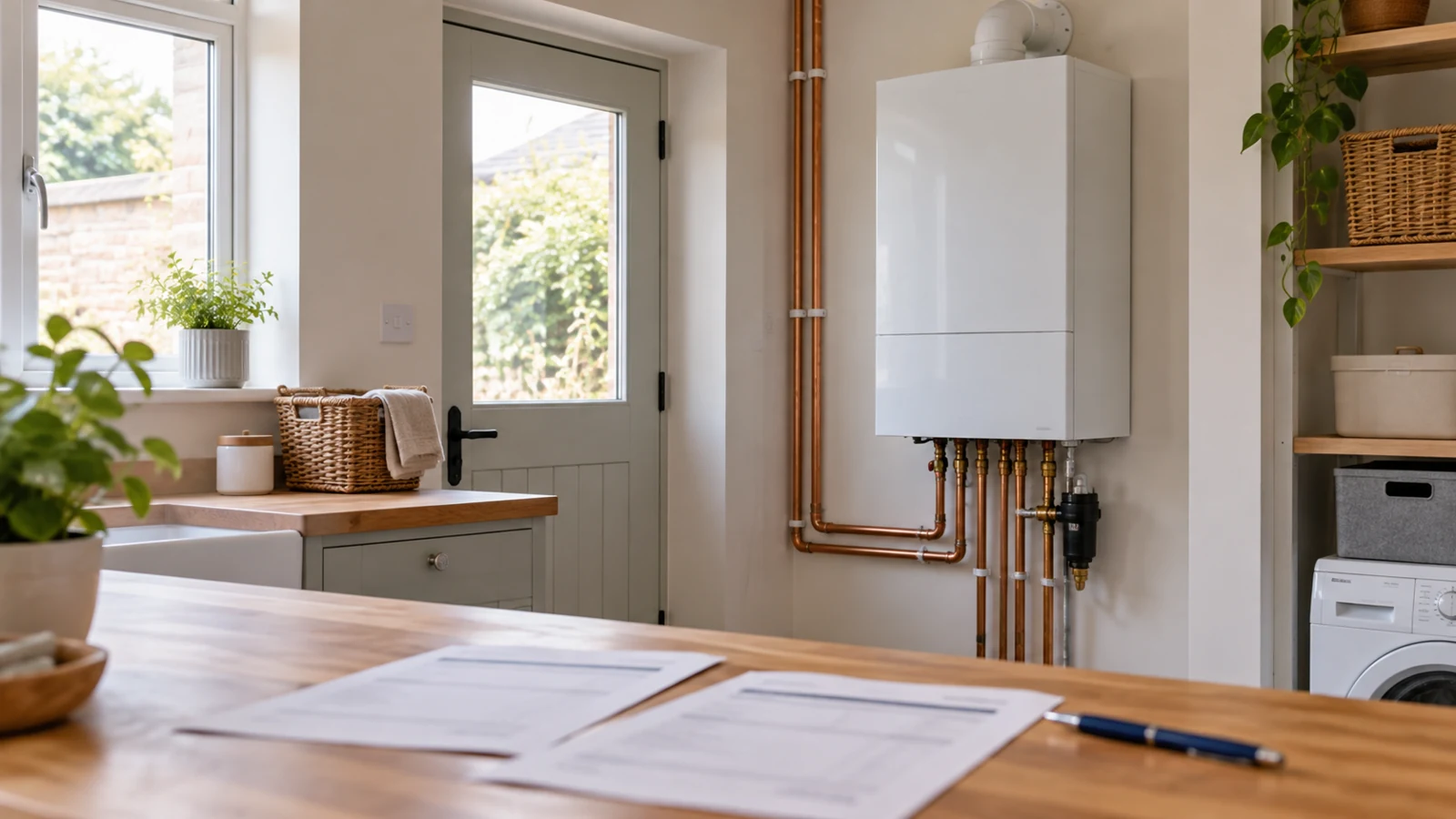
To compare boiler replacement quotes fairly, give each installer the same brief and check the complete installed specification. The appliance model matters, but so do the flue, controls, system cleaning, pipework, waste removal and aftercare. A cheaper total can cover a smaller job.
This guide is for UK homeowners replacing an existing domestic gas boiler. It explains how to compare written proposals before committing, rather than putting a single price on homes with different heating systems. Research checked on 27 October 2026.
Start by agreeing what “replacement” means
Replacing a combi boiler on the same wall is a different project from moving it upstairs or removing a hot-water cylinder. Tell every installer whether you want to keep the current boiler position and system type. If an engineer recommends changing either, ask for the reason and a separately described alternative.
A combi heats mains water as you need it; system and regular boilers work with stored hot water. Your household’s simultaneous shower and tap use deserves attention before choosing a different arrangement. The Energy Saving Trust’s guide to boiler types explains these differences. Our conventional boiler guide also helps frame questions about retaining a cylinder.
When researching boiler replacement prices, check whether the example describes a same-position swap, relocation or conversion. Use a guide to prepare questions, then obtain a written quote for your property. A starting price cannot confirm the condition of concealed pipework or the suitability of an existing flue.
What boiler replacement quotes should include
Use this checklist beside each proposal. Mark an item “unclear” if the installer has not addressed it; silence does not establish that it is included. Ask for clarification in writing so you can keep it with the accepted quotation.
| Item | What to ask for | Why it matters |
|---|---|---|
| Boiler | Exact make, model, type and proposed output | Different models and outputs are not equivalent offers. |
| Position and flue | Location, flue route, access equipment and making good | A relocation can add work beyond swapping the appliance. |
| Connections | Assessment of gas supply, condensate drainage and heating pipes | Existing connections may need alterations. |
| Controls | Named controls, compatibility, installation and demonstration | “Smart controls” alone is too vague to compare. |
| System condition | Cleaning method, treatment, filter and any radiator work | A boiler swap may leave other heating problems unresolved. |
| Completion | Testing, commissioning records, applicable notifications and waste disposal | Define what finished work includes. |
| Total and terms | VAT treatment, exclusions, payment stages and quote validity | The final payable amount must be clear. |
| Aftercare | Product cover, installer workmanship cover and servicing conditions | Different types of cover can have different limits. |
Ask how the boiler has been selected
Do not assume that copying the old boiler’s output is the right approach. Ask the installer how they assessed heating demand and hot-water use, and whether planned extensions or an extra bathroom affect the recommendation. If two proposals specify different outputs, resolve that difference before comparing their totals.
Record the proposed model in full. A brand name and a warranty length leave too much unspecified. If you request an alternative model, ask the engineer to confirm that the revised offer still includes the same installation work.
Make controls and existing radiators part of the conversation
Ask which existing controls will stay, which will be replaced and how the new equipment works together. The Energy Saving Trust’s heating controls guidance covers programmers, thermostats and radiator valves. Have the installer name the proposed controls and explain their operation at handover.
Also describe cold rooms, noisy radiators and repeated pressure loss. These symptoms should inform the assessment, rather than disappear beneath a line saying “new boiler fitted”. Ask what investigation or remedial work is included, and what remains outside the quote. Do not remove the boiler casing to take photographs or investigate.
How to resolve a large difference in price
First compare scope, then equipment, then terms. One installer may include new controls and wall repairs while another excludes both. Ask each to price the same agreed specification, keeping optional upgrades separate.
For example, imagine one proposal keeps the boiler in the kitchen and another moves it to a utility room. The move could involve different pipe routes, flue work and access. Asking the second installer for a same-position alternative tells you more than asking them to match the first total. This is an illustrative comparison, not a priced quotation.
Check whether a figure is a fixed quotation following assessment or an estimate subject to further checks. For possible extras, request the trigger, how the additional price will be agreed and whether your approval is needed before work proceeds. Clarify responsibility for boxing-in, decoration and any electrical work.
Ask for the total payable in pounds, including any VAT charged, rather than assuming every business presents tax in the same way. If finance is offered, compare the cash price and total repayable as well as the instalment. Do not let a monthly figure hide a difference in the underlying specification.
Check the installer and handover arrangements
Use a suitably qualified Gas Safe registered engineer for gas boiler work. Check the individual engineer’s current registration and relevant qualifications, rather than relying on a logo on a quotation. The HSE explains how to check an engineer’s registration using their ID details.
Ask who will provide the commissioning record, register any manufacturer cover and handle the notification or certification applicable to your location. Procedures differ across England, Wales, Scotland and Northern Ireland; have the installer identify the route for your property. Keep these records separately from the invoice and warranty terms.
Agree what happens if the heating does not work properly after installation: who to contact, what the installer covers and how this differs from the manufacturer’s cover. Read servicing requirements before accepting an extended warranty. A longer headline term has limited value if you cannot meet its conditions.
How to prepare one brief for every installer
You need a notebook or document, accessible appliance information and, if convenient, photographs taken safely from floor level. This is preparation for professional assessment; it does not involve opening equipment or testing gas connections.
- Describe the existing system. Record the boiler model if visible, its location and whether you have a hot-water cylinder or loft tanks. Say when you are unsure.
- Explain your household’s needs. Note bathrooms, simultaneous hot-water use, comfort problems and planned changes to the home.
- State the intended scope. Say whether you want the boiler to remain in place and list any optional changes separately.
- Request a consistent written proposal. Send each installer the checklist above and ask them to identify assumptions, exclusions and any assessment still needed.
- Resolve differences before accepting. Check registration, compare like-for-like totals and obtain written answers about extras, disruption and aftercare.
Ask how long heating and hot water are expected to be unavailable and whether access to cupboards, a loft or neighbouring land is needed. Tell the installer about anyone in the household who needs particular arrangements during the work.
Boiler replacement quote FAQs
Can I compare quotes for different boiler models?
Yes, but first ask each installer to explain the proposed type, output, controls and cover. Compare the installation scope separately so a model change does not conceal missing work.
Does replacing a boiler mean replacing every radiator?
It does not automatically mean that. Ask the engineer to assess existing radiators and explain any proposed cleaning, repairs or replacements, with those items identified in the quote.
Is an online price enough to book the installation?
Check what assessment supports it and which assumptions remain. Ask how photographs, a survey or further checks could change the price before you commit.
Should I consider a heat pump before replacing my boiler?
If you have time to consider a wider heating change, request a separate assessment. Our guide to comparing air source heat pump quotes covers the different system requirements and questions to ask.
Choose a clear specification before choosing a price
Keep the accepted quote, clarifications and payment terms together. If you are considering a different heating technology, read our air source heat pump quote checklist before narrowing the options. Ready to arrange quotes? Use the Find Me Quotes enquiry page and describe your existing boiler and proposed work clearly.