If you have noticed water coming in around the chimney breast, damp patches near the top of a room, staining on ceilings, or visible gaps where the chimney meets the roof, it may be time to compare chimney flashing repair prices from local roofers. Flashing forms the waterproof seal between the chimney stack and the roof covering. When that seal fails, rainwater can work its way into the roof space and inside the property. Current UK cost guides broadly place chimney flashing repair at around £250 to £1,200, with smaller patch repairs at the lower end and full replacement with scaffolding at the upper end.
For many homeowners, chimney flashing problems start small. A minor split, lifted edge or loose section of lead may only cause a little damp at first. However, if you leave it too long, the problem can spread into surrounding tiles, underfelt, battens and internal plaster. Therefore, many people choose to get quotes as soon as they spot a leak or visible defect. Whether you need a simple patch repair, partial lead replacement or a full flashing renewal around all sides of the stack, comparing quotes can help you understand the likely cost and the best fix for your roof.
This page explains what chimney flashing repair involves, what affects the roofing price, typical UK costs, and what to check when comparing quotations. If you are ready to move forward, use the quotation form on this page to compare chimney flashing repair quotes from local roofing specialists.
Get quotes for chimney flashing repairs
If you are planning chimney flashing work, getting several quotes can help you compare:
- likely costs
- patch repair versus full replacement
- whether scaffolding is needed
- whether lead flashing or another flashing material is being used
- whether surrounding tiles need repair too
- how quickly the work can be done
- whether the chimney stack itself also needs attention
Online price guides can give you a useful starting point. However, the actual cost depends on the type of repair, the height of the roof, access, the amount of lead needed, and whether the roofer finds extra defects around the chimney. As a result, tailored quotations usually give a much more accurate picture than a single guide price.
What is chimney flashing?
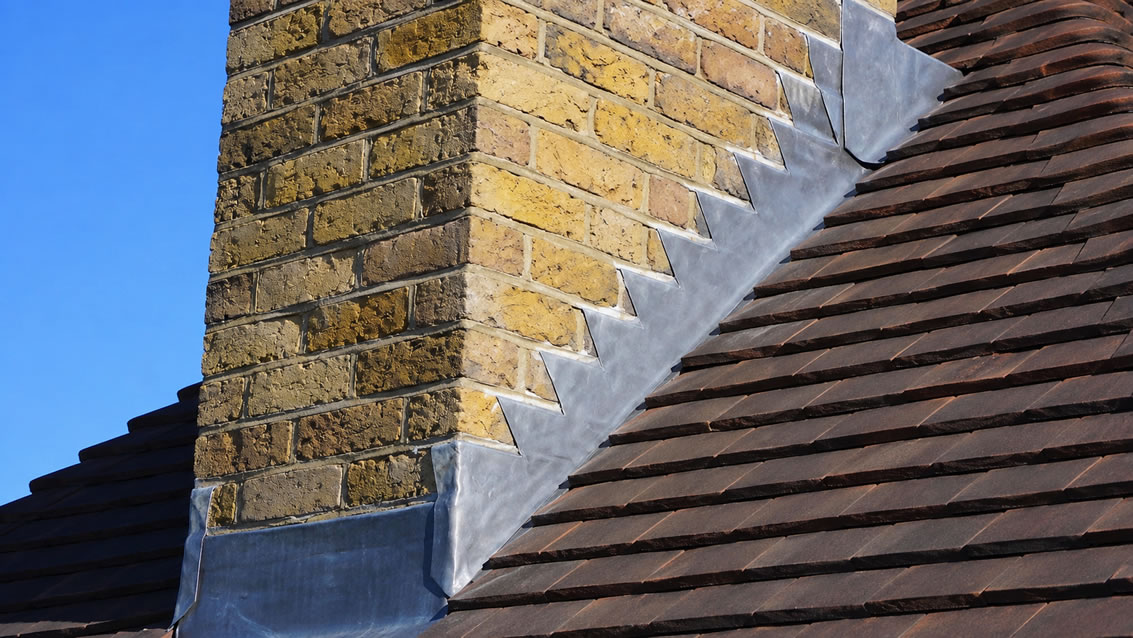
Chimney flashing is the weatherproof detail that seals the gap where the chimney stack passes through the roof. On many UK homes, roofers form it from lead because lead is flexible, durable and well suited to roof junctions.
Flashing around a chimney often includes:
- apron flashing at the front
- step flashing at the sides
- back gutter or back flashing at the rear
- lead soakers in some tiled or slated roofs
- mortar pointing or fixing into the chimney joints
These parts work together to stop rainwater entering at one of the most vulnerable points on the roof.
What is chimney flashing repair?
Chimney flashing repair means fixing the waterproof seal around the base of the chimney without necessarily rebuilding the chimney or replacing the whole roof.
A chimney flashing repair may involve:
- sealing small cracks or splits
- patching a local section of damaged lead
- refixing loose flashing
- replacing one side of the flashing
- replacing all four sides of chimney flashing
- renewing mortar that secures the flashing into the brick joints
- repairing nearby roof tiles or slates if they have also been affected
Sometimes, the roofer only needs to carry out a small patch repair. In other cases, the lead has failed more widely and a full replacement gives better long-term value.
Signs you may need chimney flashing repair
Some flashing problems are easy to spot, while others show up first inside the home.
Common signs include:
- damp patches near the chimney breast
- staining on ceilings near the chimney
- leaks in the loft after rain
- visible gaps or lifting lead around the chimney
- cracked or split lead flashing
- loose mortar where the flashing enters the chimney
- moss or debris collecting around the base of the chimney
- repeated leaks despite previous patching
If the problem only affects one small section, a straightforward repair may be enough. However, if leaks keep returning, a larger repair or full replacement may make more sense.
Common types of chimney flashing repair
Several different types of flashing work are common on UK roofs.
Patch repair to existing flashing
A patch repair usually suits smaller defects, such as a split in the lead or a local weak point. Current UK cost guides place a lead flashing patch repair from around £150, while broader chimney flashing patch repairs commonly sit around £250 when scaffolding is not required.
Partial flashing replacement
Sometimes the roofer only needs to replace one side, one section, or the most damaged part of the flashing rather than the whole lot. The price usually sits between a basic patch repair and a full replacement, depending on access and the amount of lead involved.
Full chimney flashing replacement
A full replacement means renewing all flashing around the stack. Current UK price guides commonly place a full replacement at around £450 to £600 where scaffolding is not needed, and around £800 to £1,200 where scaffolding is required. Other guides show a broader total range of around £350 to £920 depending on access and scope.
Flashing repair as part of a wider chimney repair
Sometimes the flashing is not the only problem. The chimney may also need repointing, tile repairs around the stack, or more substantial roof repairs. In those cases, the flashing cost forms part of a larger repair quote rather than a standalone job. Current UK guides place chimney repointing around £500 to £2,000, with average projects around £750.
Typical chimney flashing repair prices in the UK
These figures are guide prices only. The final quote depends on access, scaffold needs, the amount of lead, and whether surrounding roof repairs are needed too.
| Type of Work | Typical Guide Price |
|---|---|
| Small lead flashing patch repair | £150 to £250+ |
| Patch repair without scaffolding | Around £250 |
| Patch repair with scaffolding | Around £550 to £650 |
| Full chimney flashing replacement without scaffolding | £450 to £600 |
| Full chimney flashing replacement with scaffolding | £800 to £1,200 |
| Broader chimney flashing repair range | £250 to £1,200+ |
These guide figures reflect current UK cost sources for chimney flashing and broader chimney repair work.
Typical related chimney repair costs
Sometimes flashing repairs sit alongside other chimney work, so it helps to understand the wider cost picture.
| Related Work | Typical Guide Price |
| Chimney tile repair near stack | £170 to £500 |
| Chimney repointing | £300 to £2,000 |
| Broader lead flashing repair or replacement | £250 to £700 |
| General chimney flashing repair | £300 to £800 |
| Chimney inspection | £50 to £350 |
These related price ranges can be useful when a roofer finds more than one fault around the chimney area.
What affects chimney flashing repair prices?
1. Whether the flashing needs repair or full replacement
A small patch job costs much less than replacing flashing around all four sides of the chimney. Therefore, the first big cost difference comes from the scale of the repair.
2. Scaffolding and access
Access is often one of the biggest price factors. A lower chimney that a roofer can reach safely without full scaffolding usually costs much less than a chimney on a high or awkward roof. Several UK guides show that scaffolding can push a flashing job from a few hundred pounds to around £1,000 or more.
3. Amount of lead required
A larger chimney or a more extensive repair usually needs more lead. That increases both material and labour costs.
4. Condition of surrounding roof materials
Once the roofer opens up the area around the stack, they may find broken tiles, damaged slates, worn felt or rotten battens. If that happens, the total quote rises because the roofer must fix more than just the flashing.
5. Condition of the chimney stack
If the stack needs repointing or brick repairs as well as flashing work, the overall project cost will be higher.
6. Property location
Labour and access costs often run higher in some areas than others, especially on more difficult urban sites.
When is patch repair no longer enough?
A patch repair often makes sense if the problem is small and localised. However, full replacement may give better value where:
- leaks keep coming back
- the lead has split in several places
- the flashing has lifted away widely
- mortar holding the flashing has failed around multiple sides
- the chimney area has already had several repairs
- nearby tiles or slates also show damage
In these situations, replacing all flashing around the chimney may save money over time compared with repeated short-term fixes.
What happens during a chimney flashing repair?
Step 1: Inspection and quote
The roofer checks the flashing, surrounding tiles or slates, chimney brickwork and access requirements before pricing the job.
Step 2: Access arranged
Depending on the roof, the contractor may use ladders, a tower or full scaffolding.
Step 3: Damaged flashing opened up
The roofer lifts surrounding materials as needed and removes the failed section of flashing or mortar.
Step 4: Repair or replacement carried out
The contractor patches the lead, refixes loose sections, or installs new flashing where needed.
Step 5: Surrounding roof checked
Before finishing, the roofer checks nearby tiles, slates and the chimney joint for related faults.
Step 6: Roof made watertight
Finally, the contractor clears waste and makes sure the area is secure and weatherproof.
How to compare chimney flashing repair quotes
It is tempting to focus only on the lowest number. However, the cheapest quote does not always offer the best value.
When comparing quotes, check:
- whether the roofer is quoting for a patch repair or full replacement
- whether scaffolding is included
- how many sides of the chimney are included
- whether lead is included or priced separately
- whether nearby tile or slate repairs are included
- whether repointing around the flashing is included
- whether waste removal is included
- how soon the job can be done
Most importantly, make sure the quotes are genuinely comparable. Otherwise, one price may look lower simply because it leaves out access costs or nearby repair work.
Why homeowners compare chimney flashing prices
Many people first search for chimney flashing prices after noticing a leak indoors. However, comparing quotes early can help you avoid more serious water damage later.
Requesting quotes can help you:
- compare patch repair versus replacement
- understand whether scaffolding is likely
- budget more accurately
- deal with leaks before they spread
- find out if the chimney stack itself also needs work
- choose a roofer with the right experience
If you have damp around the chimney, visible lead damage or repeated leaks after rain, using the form on this page is an easy way to compare chimney flashing repair quotes from local roofing specialists.
Get chimney flashing repair quotes
Whether you need a small patch repair or a full lead flashing replacement, comparing quotations is a practical first step. It helps you understand the likely cost, compare the scope of work, and decide what repair makes the most sense for your roof.
Use the quotation form on this page to request chimney flashing repair quotes from local roofing specialists.
Frequently asked questions
How much does chimney flashing repair cost?
Current UK guides broadly place chimney flashing repair at around £250 to £1,200, depending on whether the job is a small patch repair or a full replacement with scaffolding.
How much is a patch repair to lead flashing?
A small lead flashing patch repair can start from around £150, while broader patch repairs often sit around £250 when scaffolding is not required.
How much does full chimney flashing replacement cost?
Current UK guides commonly place a full replacement at around £450 to £600 without scaffolding and around £800 to £1,200 with scaffolding.
Is scaffolding always needed for chimney flashing repair?
Not always. Some lower or easier-to-access chimneys may not need full scaffolding. However, scaffolding is common on higher or more awkward roofs, and it can make up a large share of the project cost.
What causes chimney flashing to fail?
Common causes include ageing lead, lifted sections, cracked mortar, storm damage, movement in the chimney stack and general weather exposure. These faults can all let water in at the roof junction.
Can chimney flashing be repaired instead of replaced?
Yes, in many cases a roofer can repair a local defect instead of replacing all the flashing. However, if the lead has failed more widely or leaks keep returning, replacement may give better long-term value.
Does chimney flashing repair include repointing?
Sometimes, but not always. Some quotes include renewing the mortar that secures the flashing, while others price repointing separately. It is worth checking before comparing quotes.
Should I get more than one chimney flashing quote?
Yes. Comparing quotes helps you understand whether you need a patch repair or full replacement, whether scaffolding is included, and whether the chimney stack also needs extra work.