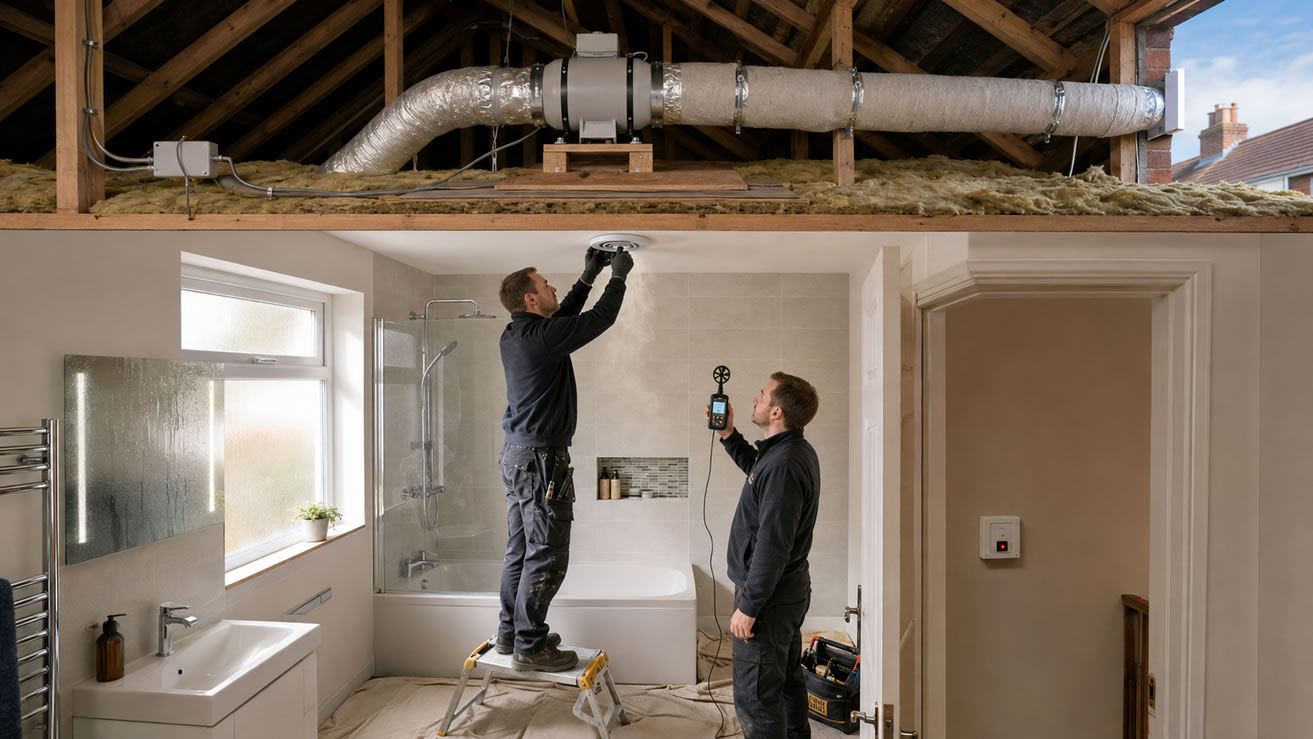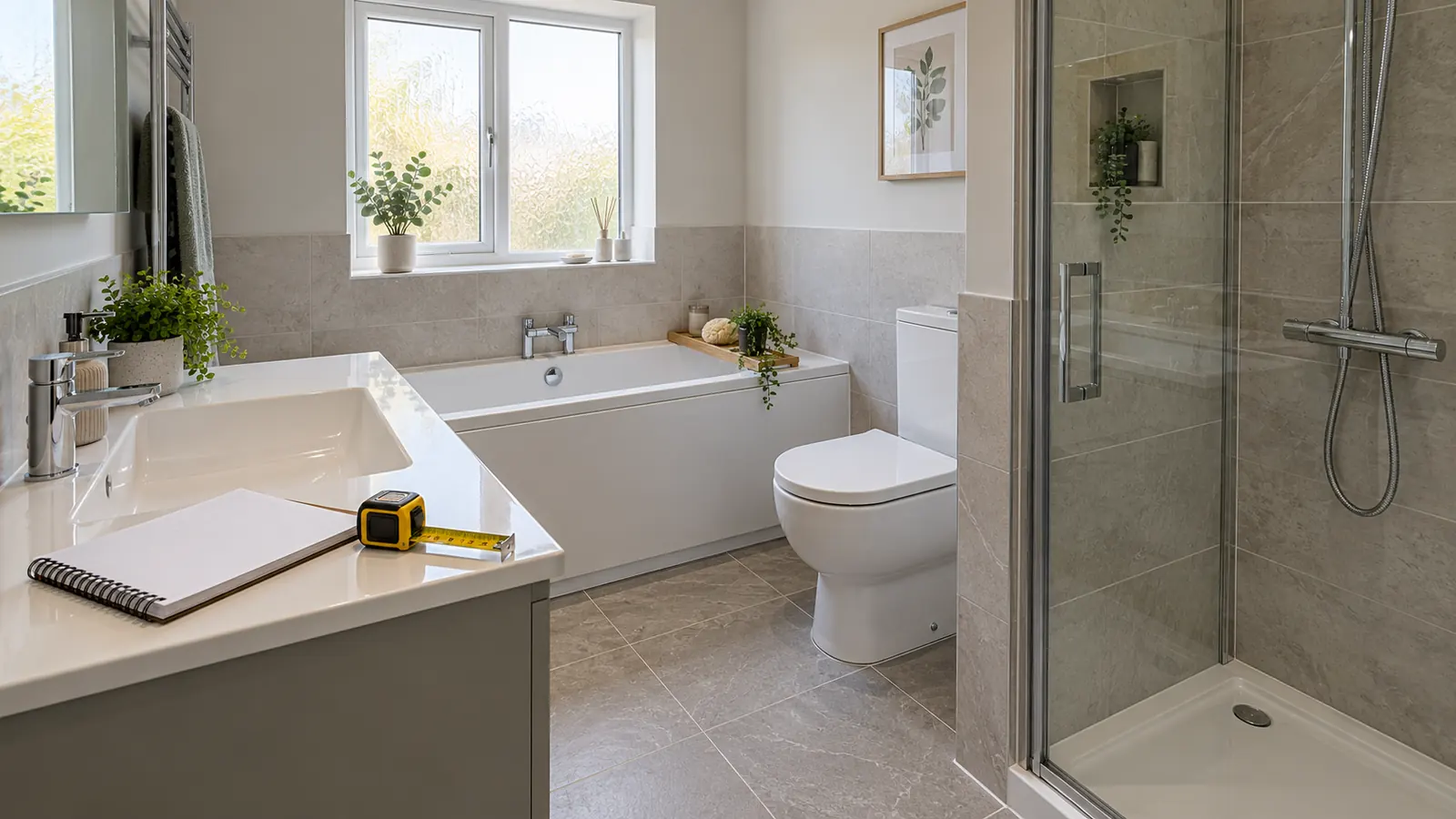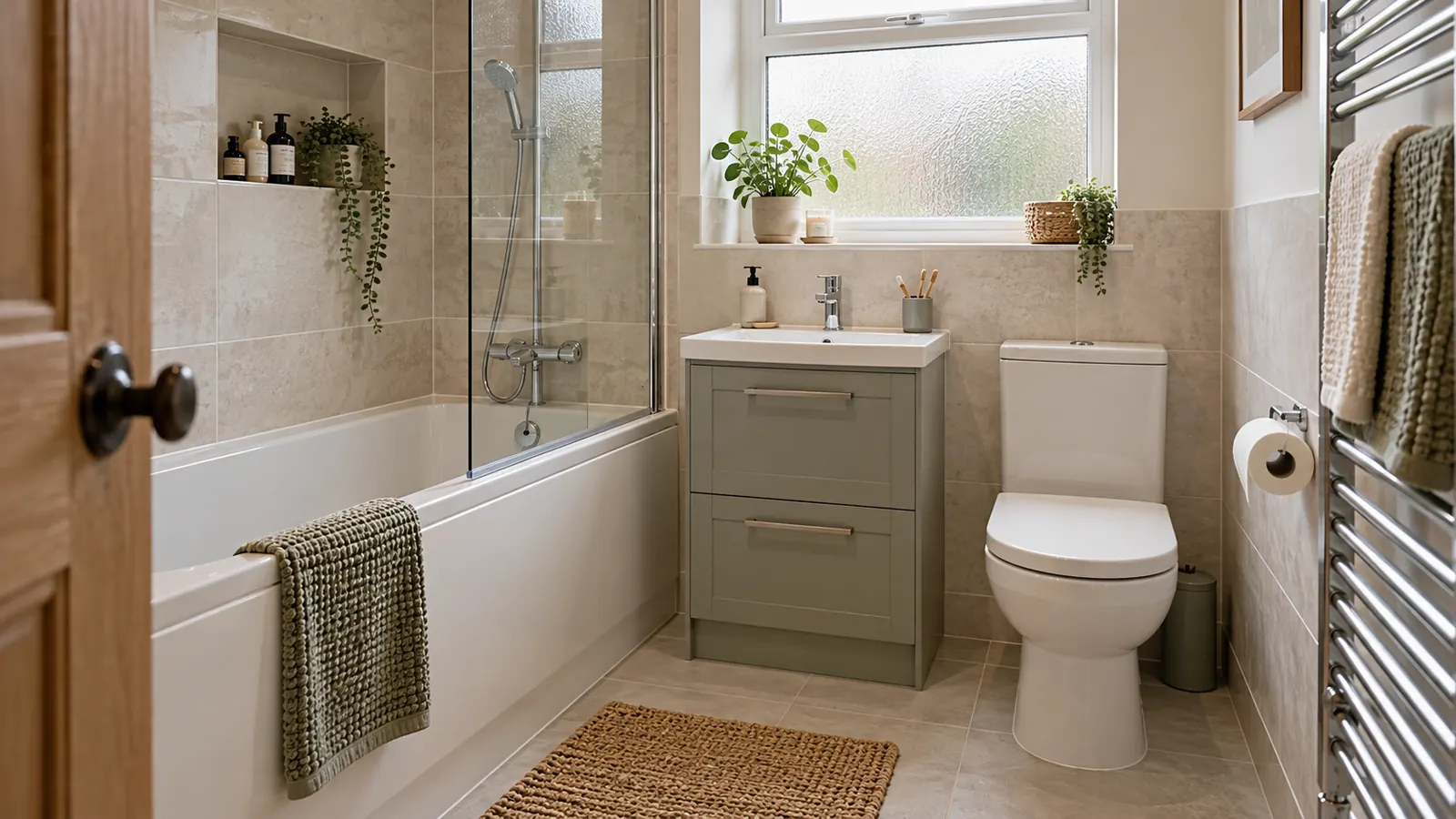
If the layout works and the room is sound, a refurbishment or like-for-like replacement may be enough. If water damage, awkward plumbing or a poor layout needs fixing, plan for a fuller renovation. The important decision is what must change behind the visible finishes, not which new tiles you like most.
This guide is for UK homeowners deciding what to ask bathroom fitters to price. It separates common project scopes so you can describe your room clearly, while leaving the final specification to an on-site assessment.
Four scopes that sound similar but price differently
| Scope | Typical work | Check before choosing |
|---|---|---|
| Refurbishment | Refresh finishes, fittings or lighting while keeping the layout and most sound parts | Are the surfaces and plumbing you plan to keep actually sound? |
| Like-for-like replacement | Replace the bath, basin, WC or shower in broadly the same positions | Will the new fittings connect without significant changes to wastes or walls? |
| Full renovation | Strip out and rebuild more of the room, including services and waterproofing where needed | What condition are the floor, walls and concealed pipework in? |
| Layout redesign | Move fittings to make the room work better | Can the new waste routes, floor build-up and access be achieved? |
These are planning descriptions, not fixed industry packages. A fitter might use “refit”, “replacement” and “renovation” differently. Define the actual work in your brief and ask for a written scope.
When a refurbishment makes sense
A refurbishment suits a room that functions well but looks tired. You might change taps, the vanity, lighting and decoration, renew failed sealant and update selected tiles. Keeping the bath and toilet positions often reduces disruption. It does not make the work automatically simple: damaged plasterboard behind tiles, an old leak or unsuitable ventilation may require more work than the visible refresh suggests.
Before deciding to keep an item, ask whether it can be removed or worked around safely and whether its remaining life fits the new finishes. Retiling around a failing shower tray can create expensive rework. A fitter should inspect suspect areas rather than promise that everything behind them is sound.
When replacement becomes a full renovation
A like-for-like suite replacement keeps the arrangement, but “same position” does not mean every new product lines up with the old connections. A new basin can have different tap and waste positions; a different bath may expose unfinished floor or wall areas. Ask the installer to show which making-good work is included.
Choose a fuller renovation when several parts need attention together: recurring leaks, soft flooring, poor waterproofing, ageing services or finishes that must come off to reach the problem. Budget and programme for inspection after strip-out, with a written method for agreeing any newly discovered repairs. Do not let a low headline price hide necessary backing, waterproofing, extraction or disposal.
Redesign only when the new layout earns its cost
Moving a toilet, bath or shower can improve circulation, accessibility or storage. It also changes the questions a fitter must answer. Where will the waste run? Is there enough fall to drain it? Will the floor need building up? Can valves and traps remain accessible? If walls are to move, structural and service checks may be needed.
Sketch the current and proposed positions and explain the problem you are solving. For example, replacing a rarely used bath with a shower might release floor space without moving the WC. Ask the specialist to assess the drainage and waterproofing rather than assuming the swap is straightforward.
Include the less visible work in every brief
Whatever scope you choose, ask about the condition of the substrate behind tiles, the waterproofing at wet areas, ventilation, electrical work, waste removal and making good. In England, GOV.UK explains when building regulations approval may be needed for bathroom installation involving plumbing and electrical changes near a bath or shower; it lists simple replacement of a bath, toilet or basin separately as work that generally does not need approval. The exact position depends on the job. Rules elsewhere in the UK differ, so check locally before work starts.
Electrical Safety First advises using a registered electrician for bathroom electrical installation work. Ask who will install and test lights, fans or electric heating and what documentation you will receive. In England, Approved Document F covers ventilation requirements; ask how any extractor will vent outside and whether its route is included.
How to choose a scope before requesting quotes
You need a tape measure, a simple room sketch and photographs taken without opening up walls or touching services. Leave checks of hidden damage, drainage and electrics to appropriate tradespeople.
- List what fails today. Separate cosmetic dislikes from leaks, poor ventilation, unsafe fittings and layout problems.
- Mark what can stay. Record the bath, basin, WC and shower positions and which items you would keep if inspection confirms they are sound.
- Describe the outcome. Say whether you want a fresh appearance, new fixtures in place or a different arrangement, including any access needs.
- Ask for an inspection-led scope. Request that each fitter identifies assumptions, exclusions, waterproofing, ventilation and any provisional repairs.
- Compare written quotes on the same brief. Clarify product allowances, VAT, disposal, timing, payment stages and how changes need your approval.
Citizens Advice recommends written quotes and checking insurance before agreeing building work. Once you know your preferred scope, our bathroom renovation quote checklist helps you compare what different installers have included. If you want introductions to independent bathroom renovation specialists, Local Bathrooms offers a bathroom-focused quote enquiry service. Each responding company should assess and price your own room.
Bathroom project scope FAQs
Can I keep the bathroom layout and still need a full renovation?
Yes. A room can need new waterproofing, flooring or pipework even when every fitting stays in its original position. The condition behind existing finishes determines the work.
Is replacing a bath with a shower a refurbishment?
It depends on the work required. The new drain position, floor or tray build-up and waterproofing may make it a more substantial conversion. Ask for a site assessment and an itemised scope.
Should I buy fittings before a bathroom fitter visits?
Collect examples and dimensions, but confirm compatibility, delivery timing and who is responsible for damaged or unsuitable products before ordering. A chosen product may not fit the available waste or wall space.
What if hidden damage appears after strip-out?
Ask the fitter to document the problem, propose a remedy and give you a written price and programme change before extra work proceeds. Your contract should explain how variations are approved.
Start with the room, then price the work
Describe the problems you need solved and the fittings you hope to keep. Invite fitters to challenge assumptions during a survey, then compare written quotations for the same agreed scope. You can use Find Me Quotes' home improvement quote request to set out your bathroom project.