A useful patio installation quote tells you more than the price per square metre. It should describe the finished area, paving, excavation, base, drainage, edging, waste removal and what happens if the ground is unsuitable. Give each installer the same brief and compare the written scope before comparing totals.
This guide is for UK homeowners planning a new garden patio or replacing an old one. It explains what to ask at a site visit and how to spot the gaps that can turn a low initial price into a larger bill.
Define the patio before asking for prices
Measure the approximate length and width, then show installers where you want the patio to end. Note whether they must remove turf, decking or existing slabs. Photograph the route from the road to the garden: a narrow side passage, steps or a long carry can affect labour and waste removal. Mention known pooling, a sloping garden, manhole covers and any intended steps or retaining walls.
Choose a paving type, or ask each company to price the same two alternatives. “Sandstone” or “porcelain” alone can still leave room for different sizes, thicknesses, finishes and laying methods. Request a named product or a clear specification, including colour, size and joint finish. If you will supply the slabs, agree who checks quantities, breakages and suitability.
An installer should assess levels on site. A patio beside a house needs a plan for finished height and surface water; simply laying new slabs over the old ones may create problems at doors, air bricks or the damp-proof course. Marshalls’ laying guidance discusses a firm sub-base and drainage, while its sandstone guidance covers finished levels below the damp-proof course. The right design depends on the site and the chosen paving system.
What should a patio installation quote include?
Ask for the work and materials to be itemised. Citizens Advice recommends a written quote that sets out the work, materials, VAT position and when the price may change.
| Part of the job | Ask the installer to specify |
|---|---|
| Area and setting out | Measured paved area in m², layout, levels, steps, curves, cuts and any change to borders or lawn. |
| Removal and ground preparation | What is lifted or excavated, approximate depth, disposal of spoil and old slabs, and treatment of soft ground if found. |
| Base and laying | Sub-base material and compacted depth, bedding method, any primer required by the paving manufacturer, and edge restraint. |
| Paving and finish | Product, size, thickness, quantity allowance, pattern, joint material, edging and any sealing included. |
| Water management | Direction of fall, where water will go, and any channel drain, connection or soakaway priced separately. |
| Practical terms | Site access, protection of the garden, skip or delivery costs, VAT, start date, expected duration, payment stages and exclusions. |
The sub-base is particularly easy to overlook because it disappears beneath the finished patio. Ask each contractor to state how much will be excavated, what material will be compacted and how they will adapt if they uncover weak ground. A quote for laying slabs on an existing sound base is a different job from a full excavation and rebuild.
Drainage needs an answer, not just the word “fall”. Ask where water will run in heavy rain and whether the proposed solution is included in the price. A channel drain without an agreed outlet is not a complete plan. Check that the finished surface will not direct water towards the house or a neighbour’s property. If the design changes the garden level substantially, ask the installer to raise any planning or boundary issues early and check with the local planning authority where needed. Planning rules vary across the UK and by property.
Compare prices for the same scope
When researching patio installation prices, treat any headline figure as a starting point for questions. Your written quote should say whether it covers the paving alone or the full job, including excavation, base, labour, drainage and disposal. A rate per m² cannot settle those questions by itself.
For example, one installer may quote to lift old slabs and lay new ones on the existing base. Another may quote to excavate, build a new compacted base, add edging and remove all waste. Even if both list the same paving, they have priced different work. Ask the first installer whether the existing base has been assessed and what a rebuild would cost if it proves unsuitable. Ask the second to identify any allowance for unforeseen ground conditions.
Compare the VAT treatment and any provisional sums. A provisional sum is an allowance for work or materials that cannot yet be priced precisely; ask what is assumed and how a change will be approved. Do not assume a quote includes steps, drainage, sealing or moving a manhole cover unless each is stated. Get the agreement in writing before work begins.
The lowest total is not automatically the best value. Check recent similar work, insurance, the proposed schedule and how the installer will resolve defects. Citizens Advice advises obtaining written quotes from several traders and checking insurance and references before choosing one.
How to prepare a patio quote brief
You need rough measurements, safely taken photos and a short list of your preferred materials. Leave ground assessment, drainage design and installation details to the tradesperson.
- Mark the intended area. Record approximate dimensions and show where paving meets doors, lawn, paths and boundaries.
- Describe the existing surface. Tell each installer what must be removed and mention standing water, soft spots, slopes or previous movement.
- Specify comparable finishes. Ask each company to price the same paving type, size, pattern, edging and joint treatment, or to separate alternatives.
- Request an itemised scope. Have excavation, base, laying, drainage, disposal and optional extras shown clearly.
- Resolve assumptions. Ask about VAT, site access, delivery, payment stages, timing and the process for pricing unexpected work before you accept.
Patio installation quote FAQs
Is a price per square metre enough to compare installers?
No. Check the measured area and whether the rate includes materials, excavation, sub-base, labour, drainage, edging, VAT and waste removal. Small jobs can also carry fixed delivery or setup costs.
Can new paving be laid over an old patio?
Sometimes an existing base may be suitable, but that requires an on-site assessment. Overlaying can raise the finished level and affect doors, drainage and the damp-proof course. Ask the installer to explain the proposed build-up and its limitations in writing.
Should drainage be a separate line in the quote?
The quote should at least state the planned falls and where water will discharge. If a channel, soakaway or other drainage work is needed, ask for its scope and cost to be explicit.
What if the installer finds poor ground after lifting the old patio?
Ask for the condition to be explained, with photographs if practical, and a written price for the proposed change. Agree the extra work before it proceeds.
Take the next step
Send the same patio brief to several installers and ask each one to make exclusions and assumptions visible. You can request home improvement quotes through Find Me Quotes and compare the written responses on a like-for-like basis.
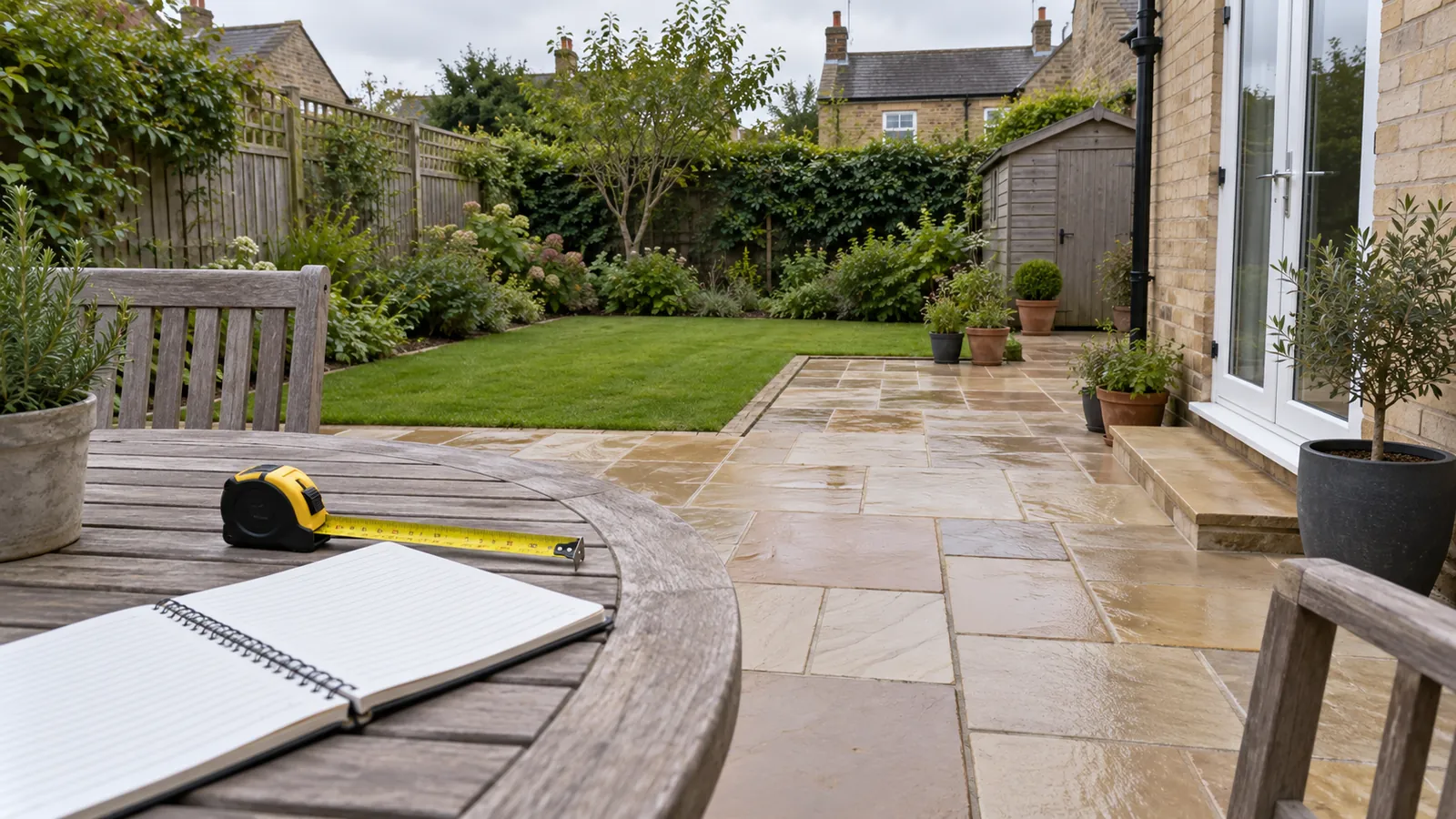
Featured image: AI-generated illustration of a garden patio; it is not a completed Find Me Quotes project.